Get Full Government Meeting Transcripts, Videos, & Alerts Forever!
Get email alerts on the Transportation Peer To Peer topic
No spam. Unsubscribe anytime.
Committee hears competing testimony on peer-to-peer car-sharing bill; decision made to engross amendment
Summary
Senate Bill 351, a peer-to-peer car-sharing bill amended to follow NCOIL model language, drew competing testimony from traditional rental-car companies and platforms such as Turo, airport authorities and DFA. The committee heard extensive Q&A and chose to engross the amendment and gather additional legal and fiscal information rather than vote.
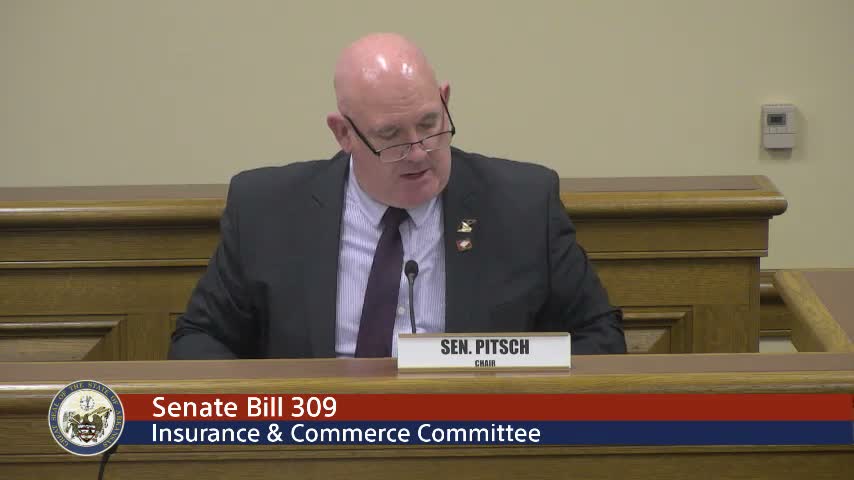
Senate Bill 351, which addresses peer-to-peer car sharing, was the subject of extended testimony as the Senate Insurance & Commerce Committee considered a large amendment that would adopt language modeled on the National Conference of Insurance Legislators (NCOIL) peer-to-peer car-sharing recommendations.
Sponsor and amendment: The sponsor told the committee the amendment would incorporate the NCOIL model and asked the panel to hear witnesses before voting. The proposed changes cover several areas: insurance requirements, marketplace tax treatment, and airport contract/permit language that would require peer-to-peer providers to enter written agreements with airports operating on airport property.
Supporters representing traditional rental companies urged the committee to "level the playing field." Julie Mullenix, representing Enterprise and the American Rental Car Association, argued that established operators pay substantial taxes and fees and that the legislation would ensure peer-to-peer platforms operate under comparable obligations. Mullenix provided multi‑million-dollar figures for taxes, rental taxes and airport fees paid by Enterprise in Arkansas to illustrate the economic stakes.
Airport safety and federal grant assurances: Airport officials, including Shane Carter of the Little Rock Municipal Airport Commission, said airports must comply with FAA grant assurances, citing the Airport and Airway Improvement Act and grant assurance 24, which requires airports to maintain fee and rental structures. Airport witnesses argued that allowing peer-to-peer operators on airport property without agreements could create a safety concern and undermine equitable enforcement of airport fees.
Opposition and platform testimony: Dustin Bridal, representing Turo, urged senators to oppose the bill’s airport, excise‑tax and insurance provisions. He said peer-to-peer services are not traditional rental companies, that Arkansas hosts thousands of users and many small hosts who rely on modest monthly earnings, and that state‑level, prescriptive mandates would hinder the platform and its users. Bridal noted Turo negotiates permits in other states and asked the committee to allow local negotiation rather than statewide mandates.
Tax and marketplace-facilitator questions: Members asked DFA and witnesses whether marketplace-facilitator thresholds (the transcript cites a $100,000/200-transaction threshold) apply to peer-to-peer platforms and who would be responsible for collecting and remitting taxes if thresholds are not met. DFA confirmed it had issued a legal opinion and explained the facilitator threshold and collection implications.
Committee action: After extensive testimony and questions, including on FAA grant impacts, tax treatment, airport contracting, and insurance requirements, the committee decided not to adopt the amendment at this hearing. Instead the sponsor and chair agreed to engross the amendment, collect additional requested information from DFA, airports, and stakeholders, and return with an engrossed bill for action at a future meeting.
What to watch: The committee’s decision to engross the amendment means the final text may change before a vote. Key outstanding items for follow-up are: any formal documentation on FAA grant‑assurance risk, DFA’s written fiscal/legal analysis of marketplace facilitator tax implications, and negotiated permit language addressing airport safety and equitable fee enforcement.
Closing note: The hearing captured a classic competition-versus-innovation policy debate: legacy industries seeking uniform obligations and taxation on new platforms, airports seeking contractual authority tied to federal grant rules, and platforms warning that broad state mandates could impede peer-to-peer participation and small supplemental incomes.