Get Full Government Meeting Transcripts, Videos, & Alerts Forever!
Get email alerts on the Medicaid Waiver topic
No spam. Unsubscribe anytime.
Senate committee advances Arkansas HOME Medicaid waiver with added oversight; bill passes as amended
Summary
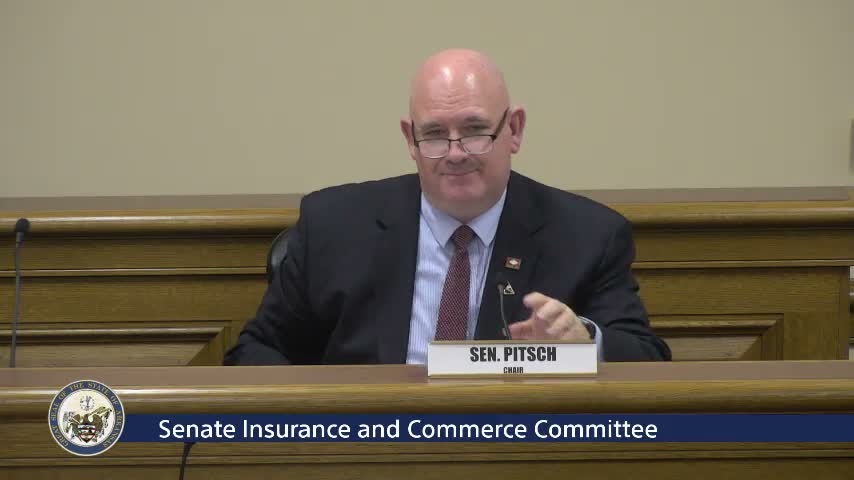
The Senate Insurance & Commerce Committee passed legislation to seek a five‑year Arkansas HOME Medicaid waiver (Arkansas Health and Opportunities for Me) after adopting an amendment adding oversight and minority representation; lawmakers questioned cost‑sharing, rural hospital impacts and implementation timelines before the voice vote.
Senators on the Senate Insurance & Commerce Committee voted to advance the Arkansas HOME waiver framework after adopting an amendment that adds accountability measures and minority‑party representation on an oversight panel.
Senator Irvin, who presented the measure, described Arkansas HOME (Arkansas Health and Opportunities for Me) as a five‑year waiver relying on qualified health plans (QHPs) and premium assistance. "This new RHOM waiver would bring in an estimated $9,766,000,000 from the federal government into the state economy over the next 5 years," Irvin said, and she said the program would increase payments to providers and hospitals by an estimated 25%–65% compared with traditional Medicaid rates.
The committee adopted an amendment before debate that, among other items, expanded oversight. Irvin said the amendment requires the Department of Human Services (DHS) to develop additional reforms and bring them to the legislative council or its executive subcommittee if quality and health performance targets are not met for two years. The bill also creates a Health and Economic Outcomes Accountability Oversight Advisory Panel to set metrics and review quarterly reports.
Committee members pressed DHS and other officials on implementation details. Dennis Smith, senior adviser for Medicaid and health care reform at DHS, described the cost‑sharing approach: federal rules permit cost sharing capped at 5% of household income and the bill follows those guidelines. "The most that you could pay for a doctor's visit is $4.70," Smith said, adding that QHPs will track beneficiary cost sharing and a system flag prevents members from exceeding the cap.
Lawmakers asked how the waiver would affect rural hospitals. Irvin pointed to a map showing relatively few rural hospital closures in Arkansas compared with neighboring states and said the financial model—shifting some individuals into QHPs and negotiating a more favorable federal match—produced federal dollars that helped keep rural facilities operating during recent years. Hospital representatives said the payment differential is substantial: Chris Barber, chair of the Arkansas Hospital Association, said inpatient payments differ by about 37% between Medicaid fee‑for‑service and QHP reimbursements, and physician services show roughly a 48%–49% gap, figures he said reflect typical inpatient and physician service examples.
Members also discussed eligibility questions (including Compact of Free Association nations), the random assignment mechanism for QHP enrollment, purchasing guidelines and timing. DHS staff said the state will finalize purchasing guidelines and rate instructions in advance of carrier rate‑setting (the transcript references an April 30 date in the purchasing schedule) and noted the waiver and related rules must go through state and federal public comment and federal negotiation before implementation. DHS staff said the state will not seek a work requirement now but the legislation includes language allowing the state to pursue a block grant or other waiver opportunities in the future if federal law and policy change.
A member also asked about a community investments provision that allows DHS to approve up to 1% of revenues for community investments; staff estimated that 1% was about $12,000,000 using 2020 revenue figures and said the number is an approximate, historically based estimate.
After final comments and recognition of supporters in the room, Senator Hammer moved to pass the bill as amended; Senator Irvin seconded. The committee approved the bill by voice vote and reported it passed out of committee.
Next steps: committee members and DHS staff said they will prepare waiver documents for state public comment, submit the waiver to federal authorities for national comment and begin negotiations and rule development ahead of the waiver’s anticipated start date. The committee did not record a roll‑call vote in the transcript; the passage was by voice vote.