Get Full Government Meeting Transcripts, Videos, & Alerts Forever!
Get email alerts on the Pharmacy Benefit Managers topic
No spam. Unsubscribe anytime.
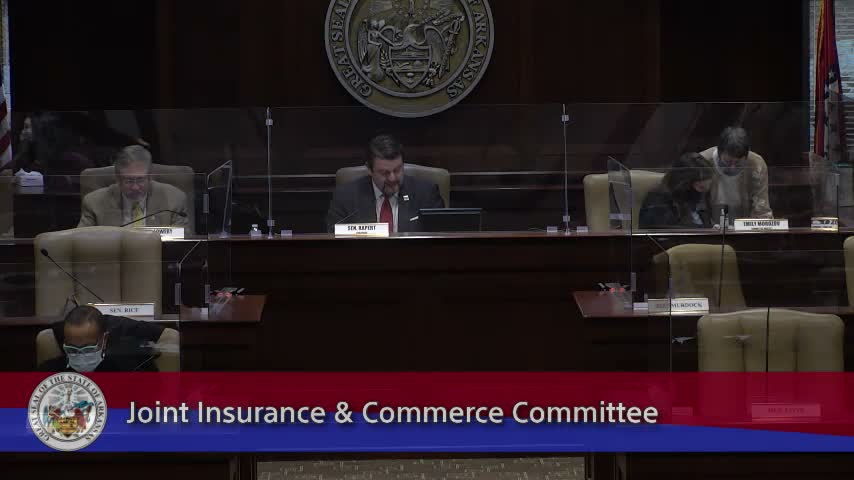
Arkansas interim study on drug prices hears competing views on PBMs, transparency and pharmacy survival
Summary
Lawmakers opened an interim study on skyrocketing prescription costs and heard testimony from PBM representatives, pharmacists, PSAO advocates and retailers about transparency, spread pricing and whether vertical integration is raising patient costs.
Arkansas legislators opened an interim study into rising prescription drug costs on a hearing that brought testimony from pharmacy benefit managers (PBMs), local pharmacists, pharmacy services administrative organizations (PSAOs) and large retailers.
Melody Schroeder, vice president for the Pharmaceutical Care Management Association, told the Senate Insurance & Commerce committee that PBMs are contracted vendors who administer pharmacy benefits, negotiate formularies and aggregate buying power on behalf of plan sponsors. “Drug manufacturers set the price of the drugs,” Schroeder said, adding that manufacturers receive the largest share of the prescription‑dollar and that specialty medicines are the primary current cost driver.
Pharmacists said PBM practices have squeezed independent pharmacies and called for greater oversight. John Vincent of the Arkansas Pharmacists Association said state market exams and employer audits have found differences in what national chain pharmacies were paid and alleged that spread pricing and other PBM practices have harmed local pharmacies. “This lack of transparency and opaqueness is really, really a problem,” Vincent told the panel.
Scott Pace of Impact Management Group, representing the PSAO Coalition, described PSAOs as voluntary back‑office services that help independent pharmacies execute PBM contracts and reconcile payments; he said PSAOs do not process claims, negotiate rebates or control formularies. “PSAOs don't process claims,” Pace said, adding that federal antitrust law limits collective negotiating power by pharmacies and PSAOs.
Walmart representatives said retail chains also feel the strain of rising specialty drug costs and voiced support for transparency and fair contracting so pharmacies can sustain local access. Jody Cartwright, Walmart’s senior director of pharmacy merchandising, said Walmart views transparency as a path to lower costs for customers.
Members of the committee questioned how high generic dispensing rates — cited by witnesses at roughly 90% of prescriptions dispensed and 97% when generics are available — can coexist with large PBM revenues, asking whether vertical integration (PBMs owning pharmacies and insurers) creates incentives to steer business. PBM witnesses responded that many elements of rebate and contract terms are proprietary, that regulators do collect data, and that publishing certain contract terms broadly could, they said, reduce competition and raise prices.
The committee heard a mixture of concrete figures and contrasting interpretations: witnesses cited examples such as early hepatitis C drugs introduced at about $80,000 per course that fell after competition; PCMA presented estimates of PBM‑driven savings for plan sponsors; pharmacists cited market conduct findings and alleged spread pricing in specific contracts. Lawmakers asked for detailed reports and supporting data as the study continues.
The committee approved the Sept. 28 minutes by voice vote before hearing the presentations. The interim study will continue gathering data and stakeholder input to inform proposals for the January session.
Next steps: the committee is collecting written materials promised by several presenters and the legislative auditors signaled a planned follow‑up audit report in spring.