Get Full Government Meeting Transcripts, Videos, & Alerts Forever!
Get email alerts on the Public Health topic
No spam. Unsubscribe anytime.
State health officials and visiting physicians clash over hydroxychloroquine policy as ADH presents COVID-19 data
Summary
At a joint Insurance & Commerce committee hearing, Arkansas Department of Health officials reported case counts, contact-tracing capacity and nursing-home impacts while outside physicians urged broader use of hydroxychloroquine; ADH said it does not endorse the drug but physicians retain legal authority to prescribe off-label.
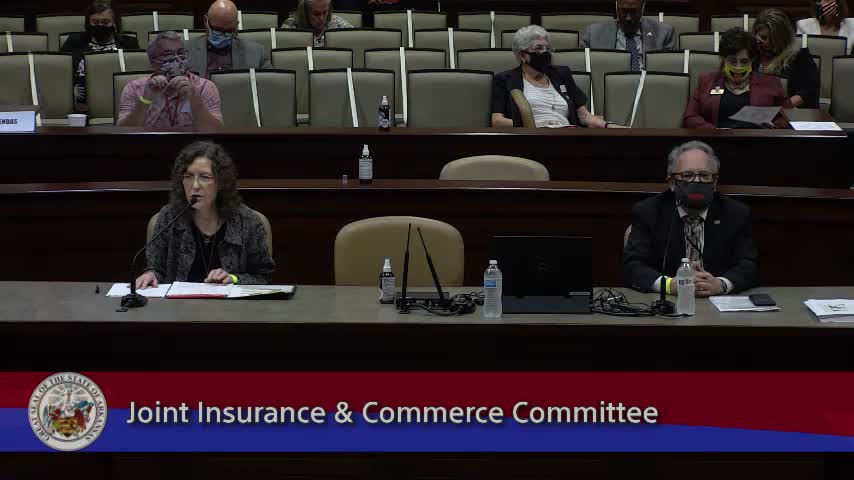
Arkansas Department of Health Secretary Jose R. Romero and State Epidemiologist Dr. Jennifer Dillahaie provided the Insurance & Commerce committee with updated COVID-19 case counts, demographic breakdowns and an overview of the state’s contact-tracing capacity, then faced extended questioning and competing medical testimony over hydroxychloroquine.
Dillahaie told the committee that, through the most recent reporting update, Arkansas recorded about 60,859 cumulative cases with roughly 54,408 recoveries and 784 deaths. She described the demographic distribution of active cases, said nursing-home residents and staff account for a substantial portion of outbreaks in congregate settings and noted maps and reports are updated twice weekly on the ADH website.
On contact tracing, Dillahaie said ADH is working with two contractors — General Dynamics Information Technologies and the Arkansas Foundation for Medical Care — and that contract teams are ramping up to several hundred contact tracers. She outlined the case-investigation workflow: case investigators interview new cases to identify infectious periods and exposures, then turn contacts over to contact tracers who notify and monitor close contacts.
Romero and Dillahaie were asked repeatedly about ADH guidance on hydroxychloroquine after an email exchange between Secretary Romero and Dr. Sandra Young, a physician formerly at the Conway Human Development Center. Romero told the committee that ADH guidance ‘‘does not recommend’’ and ‘‘does not endorse’’ hydroxychloroquine for COVID-19; he said that the department’s written advice follows FDA and CDC guidance and that physicians retain the legal right to prescribe the drug off-label.
Multiple outside physicians — including Dr. Simone Gold and Dr. Robin Armstrong, who testified by invitation — urged the committee to loosen restrictions and increase availability of hydroxychloroquine for early outpatient treatment or prophylaxis in congregate care settings. Those witnesses cited observational reports and small clinical series that they said indicate benefit when the drug is used early or with zinc.
ADH officials and several committee members pushed back on the weight of that evidence, noting the difference between randomized clinical trials and observational case reports. Romero and Dillahaie said ADH can provide additional data on deaths and hospitalizations broken down by setting when requested and defended the department’s approach to following federal guidance while protecting patients.
The hearing included a lively exchange about pharmacy practices: several witnesses said corporate chain pharmacies declined to fill some hydroxychloroquine prescriptions for COVID-19 while independent pharmacies sometimes did fill them. Dr. Sandra Young said she resigned from her facility after concluding she could not use the medication to protect residents and staff; Romero said he did not direct a prohibition and that physicians may prescribe off-label.
There were no committee votes on policy changes during the session. Members asked ADH to supply follow-up details on death certificates, the nursing-home breakdown of deaths, and written metrics for the department’s contact-tracing contractors. The chair said the committee will continue the discussion and invited ADH to return with more documents and clarifications.
Next steps: ADH to provide requested breakdowns on nursing-home deaths, appeals-triage staffing and written contract metrics for contact-tracing vendors; the committee signaled it will revisit hydroxychloroquine-related policy and pharmacy-practice questions in subsequent hearings.