Get Full Government Meeting Transcripts, Videos, & Alerts Forever!
Get email alerts on the Ambulance Funding topic
No spam. Unsubscribe anytime.
Arkansas lawmakers hear urgent pleas as rural ambulance services verge on collapse
Summary
Perry County officials told the Senate Insurance & Commerce committee their single-ambulance provider is at risk of leaving, prompting industry witnesses to push for Medicaid rate rebasing and an Upper Payment Limit program to shore up rural ambulance coverage statewide.
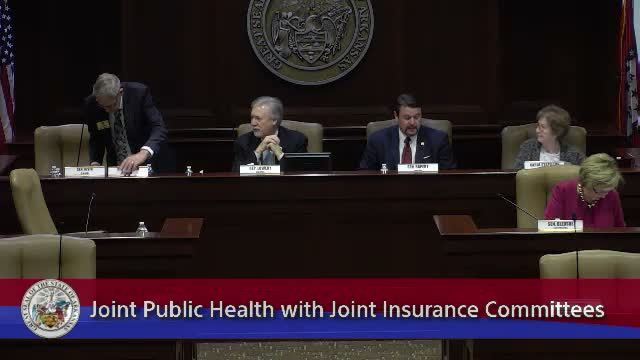
PERRYVILLE, Ark. — County leaders and ambulance providers told the Senate Insurance & Commerce committee that rural ambulance services across Arkansas face an immediate funding crisis that threatens patient safety and local access to emergency care.
Perry County Judge Toby Davis and Perryville Mayor John Rotherm described repeated cases in which no ambulance was available for critical calls, including a stroke and a child seriously injured by a dog, and said mutual-aid responses sometimes took 45 minutes or more. "We need some help," Judge Davis told the committee, and he outlined a local plan to hold a Feb. 25 quorum-court special meeting to consider a voter-approved sales tax or a personal-property assessment to subsidize service.
The county officials said their current private ambulance operator maintains one ambulance and struggles to sustain a second. Local estimates presented at the hearing put operating cost at roughly $15,000 per ambulance per month, and Perry County officials said they are targeting about $240,000 in transitional funding to support a second unit for roughly a year while a permanent assessment takes effect.
Industry witnesses from the Arkansas Ambulance Association and providers including Ken Kelly of ProMed and Jamie Pafford Gresham of Pafford EMS told the committee the Perry County situation is not unique. They said most Arkansas providers are fee-for-service and that Medicare and Medicaid together account for the majority of revenue in many rural systems. Association presenters said Medicaid base rates for ambulance services have gone largely unchanged for about 25 years and that rising costs — including new mandatory equipment, remounting ambulances, medications and recent minimum-wage increases — have pushed many services to the brink.
Association leaders urged the committee to prioritize enactment of an ambulance Upper Payment Limit (UPL) program and to press the Division of Medical Services (DMS) to correct technical Medicaid billing rules they say depress reimbursement. The UPL program the association proposed would rely on voluntary industry assessments that draw federal matching dollars; presenters said an approved UPL could deliver between roughly $100,000 and $500,000 to some small rural providers, depending on payer mix.
At the hearing DHS Division of Medical Services representatives (Mark White and Elizabeth Pittman) confirmed Medicaid is undergoing a scheduled rate review and that ambulance rates have been identified for rebasing. They said DMS has submitted a state-plan amendment seeking UPL authority and has answered CMS questions; the submission is currently under CMS review and no federal decision date was given. DHS told the committee it is working to fit any rate rebasing into the next budget cycle and to provide specific dollar impacts when available.
Committee members pressed for several specific data points: the percentage of transports that are Medicaid, the historical timing of past rate adjustments, and the potential statewide budget impact if the non-emergency and emergency codes were corrected. Presenters said a payer-mix analysis exists and DHS has the aggregate Medicaid-expenditure figures, and they urged the legislature to pursue both a rebasing of Medicaid base rates and activation of the UPL program to bring supplemental federal dollars into the state.
Lawmakers and witnesses also discussed alternative approaches such as local EMS assessment fees (a $50 annual personal-property assessment was offered as a model), ambulance districts, volunteer or hybrid volunteer models, community paramedicine and alternative-destination billing that would allow providers to be paid for treating patients without transport. Presenters warned that while some of those options help, many counties lack the population or local tax base to sustain multiple ambulances without state assistance.
The committee received a separate report from a task force convened to examine non-emergency behavioral-health transports and the intersection of EMS, law enforcement and mental-health placements. Representatives leading that task force said the subject is complex — involving patient placement, custody questions, reimbursement and liability — and recommended continued work. The committee voted to keep the task force work active and to use a joint subcommittee structure for follow-up.
The committee requested DHS and DMS return with detailed run-volume, payer-mix and cost estimates and said it will pursue both short-term measures for counties in immediate critical need and longer-term policy fixes. The chair closed the meeting, emphasizing the urgency for counties in imminent danger of losing ambulance coverage.
Next steps: DHS/DMS will provide specific fiscal numbers requested by committee members and the committee will pursue follow-up hearings and subcommittee work to refine legislative options and funding mechanisms.