Get Full Government Meeting Transcripts, Videos, & Alerts Forever!
Get email alerts on the Contact Tracing topic
No spam. Unsubscribe anytime.
Health department briefs committee on contact‑tracing capacity; vendors propose voluntary phone app to speed exposure notification
Summary
ADH reports improvements in average case and contact investigation times but acknowledges gaps in translation, reach and timeliness. Private vendors proposed a voluntary Apple/Google exposure‑notification app as a complementary tool; ADH expressed openness to evaluate the technology.
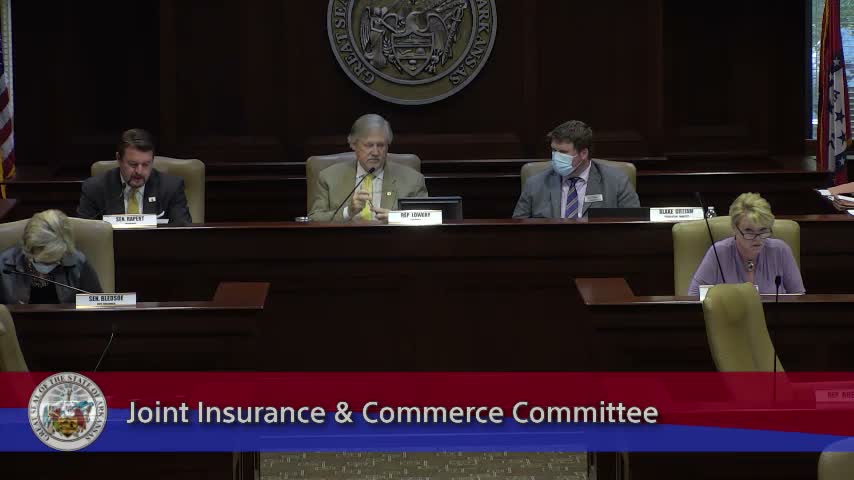
The Arkansas Department of Health (ADH) told the Senate Insurance & Commerce Committee that the state has scaled up case investigation and contact‑tracing capacity but still faces operational gaps.
Dr. Jennifer Dillehay (ADH) described the ADH workflow: laboratory reports feed case records into the health department system; nurse case investigators interview positive cases and assign contacts to contact tracers. ADH reported roughly 109 case investigators and about 785 contract tracers (through multiple vendors) and said it has reduced average case investigation time to about 36 hours from notification, with an average of roughly 19 hours to complete contact tracing in the most recent week. Officials acknowledged variation in reach, occasional long delays and challenges when phone numbers or addresses are incomplete, and they highlighted interpreter needs for Marshallese and Spanish‑speaking residents.
Private vendors Motova and the Information Network of Arkansas presented an exposure‑notification mobile app that leverages Apple/Google proximity APIs. The vendors said a state‑level adoption could permit anonymized proximity key exchanges between phones and permit verified positive users to push notifications to recent close contacts. The presenters said deployment could reach user testing in approximately four weeks and full rollout in eight weeks, with modest one‑time costs rather than ongoing millions in contract tracing. They emphasized privacy protections and voluntary participation.
ADH representatives said they welcome tools that complement manual contact tracing and will continue to evaluate technological options; they also requested time to review integration and verification details with department technology staff.
Committee action: Members asked ADH for weekly timeliness metrics, translation resource counts, and clearer documentation on outbreak classification (how the department determines whether cases at a given site represent transmission at that site). Several senators requested follow‑up meetings to evaluate the app and to explore coordination with higher education institutions.