Get Full Government Meeting Transcripts, Videos, & Alerts Forever!
Get email alerts on the Banking Marijuana Policy topic
No spam. Unsubscribe anytime.
Arkansas hearing spotlights banking, insurance gaps for medical marijuana industry
Summary
State lawmakers heard industry and banking testimony that many marijuana businesses in Arkansas already use bank accounts under FinCEN guidance, while state regulators and bankers say only Congress can provide the legal 'safe harbor' banks need to operate without federal liability.
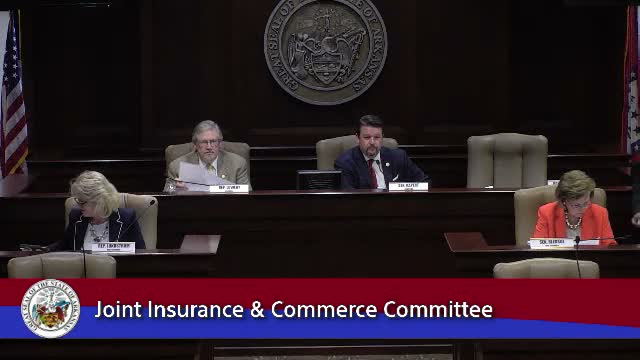
Arkansas state lawmakers on the Senate Insurance & Commerce Committee examined how the federal ban on marijuana affects banking, insurance and public safety as the state's medical marijuana market opened. Industry representatives, national banking groups and state regulators testified about compliance work underway, financial‑tracking data and the limits of state authority.
Dan Bridal, co‑founder and CEO of fintech firm Abaca, told the committee that banks are already providing services to marijuana‑related businesses if they follow the 2014 Financial Crimes Enforcement Network (FinCEN) guidance. "The cannabis industry is banked. The money is in the bank," Bridal said, adding that the state‑chartered partner bank Abaca works with has handled roughly $6,500,000 in deposits and about $4,500,000 in business‑to‑business transactions since last summer.
The nut graf: witnesses described a legal mismatch that state regulators cannot fix alone. Sabrina Bergen, vice president and senior counsel at the American Bankers Association, said federal law — specifically the Controlled Substances Act and anti‑money‑laundering statutes — leaves banks exposed. "Providing a mechanism for the marijuana industry to access the regulated banking system would help those communities reduce cash motivated crimes, increase the efficiency of tax collections, and improve the financial transparency of the marijuana industry," Bergen said, urging Congress to act on bills such as the Safe Banking Act and the States Act.
Committee members pressed Bridal on operational details. He said the accounts are held directly by licensed Arkansas businesses at the partner bank and that Abaca supplies monitoring tools and a limited web interface to help banks meet customer‑due‑diligence and reporting obligations under FinCEN guidance. Bridal emphasized that FinCEN "is not a safe harbor" but provides a compliance framework institutions can follow.
Doorley Chandler, director of Alcohol Beverage Control, provided seed‑to‑sale data drawn from the state's tracking system. Chandler said two cultivators had combined May sales of about $776,848 and that two operating dispensaries reported combined sales of $8,856,000; she cautioned it is early data and that sales tax remittance for May would be due June 20.
Banking and state regulator witnesses stressed risk and limited remedies. Robert L. Robinson IV, chairman of the Arkansas Bankers Association, said banks are "trapped" between serving local businesses and the possibility of federal enforcement, noting there is no known example of a bank losing a charter solely for serving marijuana‑related businesses that complied with applicable reporting, but that criminal and civil penalties remain possible. Commissioner Candace Franks of the Arkansas State Bank Department told legislators, "Banks need a safe harbor if they're going to bank this industry."
Commissioner Alan Kerr of the Arkansas Insurance Department explained why many insurers decline coverage linked to federally illegal activity and described captive insurance as one legal option to provide coverage more quickly under state law.
Several lawmakers framed the issue as one of rule‑of‑law clarity. The committee recorded three procedural actions early in the meeting — approval of minutes, authorization of special expenses and adoption of six interim study proposals — then devoted most of the hearing to the federal/state conflict and the practical steps institutions are taking to reduce cash‑handling risks.
The hearing closed with the committee chair urging federal action or consistent enforcement, reiterating that under current federal law marijuana remains illegal and that Congress must either change the statute or the federal government must enforce it consistently. The committee adjourned with no legislative vote on the banking or insurance questions; witnesses said the matter ultimately requires congressional resolution.