Get Full Government Meeting Transcripts, Videos, & Alerts Forever!
Get email alerts on the Insurance Business Transfer topic
No spam. Unsubscribe anytime.
Presenters urge Arkansas to consider insurance-business-transfer law as a tool for policyholder protection and economic development
Summary
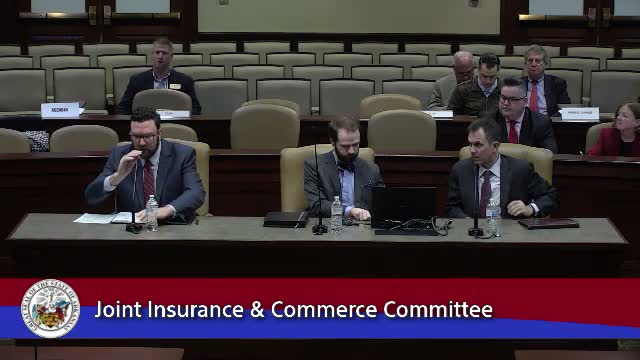
Industry and regulators briefed the Insurance & Commerce Committee on insurance business transfers (IBTs), describing statutory examples abroad and in the U.S., safeguards used in Oklahoma’s law and an Instar case that sent notices to roughly 60,000 policyholders.
Presenters from the insurance industry and state insurance staff told the Senate Insurance & Commerce Committee that statutory insurance-business-transfer (IBT) procedures can provide finality for blocks of policies while maintaining protections for policyholders.
Robert Redpath, U.S. legal director for nSTAR US, said specialized buyers often manage ‘‘runoff’’ portfolios—old liabilities that the original carrier no longer markets—more effectively than companies that no longer write the line. He told the committee the transfers can improve service ‘‘because we are focused on these lines, whereas… the old companies… are not just not interested in them.’’
Russ Galbraith of the Arkansas Insurance Department introduced the presenters and said the department is studying the mechanics and safeguards used in other states. James Mills, Instar vice president and legal counsel and a former Oklahoma deputy insurance commissioner, described the layered protections in Oklahoma’s 2018 IBT statute: approval by the transferring company’s domestic regulator, review by an independent expert, and court approval. Mills said those features create opportunities for regulators to require capitalization, bonds or other conditions if needed.
Presenters described a test transaction in which Instar moved business so that the transferring and assuming entities were reviewed by both Rhode Island and Oklahoma regulators. Redpath said notices had been mailed to roughly 60,000 policyholders from mid-century policies as part of the procedural and court notice process, with a court hearing scheduled and a 60-day objection window for affected parties.
Committee members repeatedly asked about protections if an assuming carrier later became insolvent. The presenters said there is no single ‘‘bond’’ product for every transfer; instead regulators and the independent expert examine actuarial projections, capital adequacy and reinsurance to assess solvency. Mills noted that commissioners can impose conditions (capital, escrow, restrictions) on approvals and that groups sometimes provide explicit solvency assurances for a particular transaction.
Supporters framed IBT rules as both a consumer-protection mechanism and an economic development tool: early-adopting states can attract domiciles and related business activity. Skeptical members said they wanted tight regulatory guardrails and more time to study how the process would interact with Arkansas law.
The committee did not take a vote on legislation. Presenters and department staff offered to return with additional briefings and encouraged members to consult NCOIL and NAIC materials and upcoming meetings for model-language discussion.