Get Full Government Meeting Transcripts, Videos, & Alerts Forever!
Get email alerts on the Insurance Id Card Labeling topic
No spam. Unsubscribe anytime.
Senate committee approves bill requiring insurers to label ID cards as self-funded or insured
Summary
The Senate Insurance & Commerce Committee passed SB 527 to require payers to identify on ID cards whether plans are self-funded or fully insured, aiming to reduce confusion for providers about applicable state insurance rules. The bill passed on a committee voice vote.
The Senate Insurance & Commerce Committee voted to approve SB 527, a measure that would require payers to mark health insurance ID cards to show whether a plan is self-funded or fully insured.
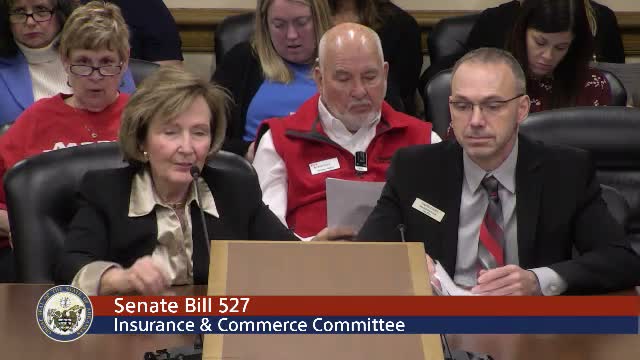
Supporters, including Senator Bledsoe and David Ivers of the Mitchell Williams law firm (representing the Arkansas Medical Society), said the change would reduce confusion when patients present insurance cards and providers need to know whether Arkansas state insurance laws — such as prior authorization, prompt payment or any willing provider rules — apply.
"It comes up chiefly when patients present in a medical setting with their ID card for their health benefit plan, and it's unclear whether their plan is a fully insured plan or whether it's a self-funded plan," David Ivers told the committee, summarizing the bill's intent.
Committee members asked no substantive questions, and no public witnesses signed up either for or against SB 527. The motion to pass was made by Senator Irvin and seconded by Senator English; the committee approved the bill by voice vote.
The bill as presented requires carriers to place identifying information on member ID cards; it does not itself change benefit requirements or coverage rules. Next steps were not specified in committee.
The committee's action reflects a narrow administrative change aimed at clarifying which regulatory regime governs a patient's plan when they seek care.