Get Full Government Meeting Transcripts, Videos, & Alerts Forever!
Get email alerts on the Net Metering topic
No spam. Unsubscribe anytime.
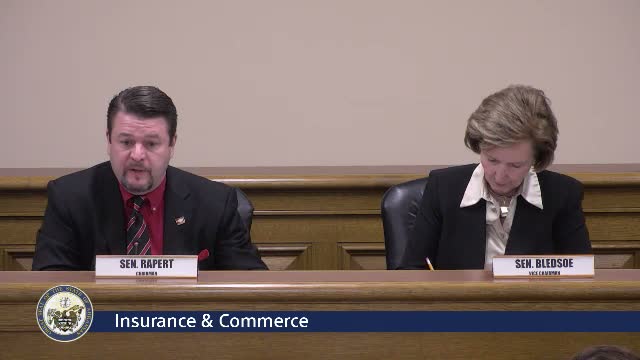
Senate committee approves net‑metering bill after tense debate over PSC role and storage rules
Summary
The Senate Insurance & Commerce Committee advanced SB 145 to enable third‑party solar leasing and change how net metering is valued, winning support from industry backers but drawing warnings that the measure could override a lengthy Arkansas Public Service Commission (PSC) process and omit some economic benefit calculations.
Senators on the Arkansas Senate Insurance & Commerce Committee voted to advance SB 145 after several hours of testimony and technical questioning, approving a negotiated measure supporters say will expand third‑party leasing and give consumers more options for rooftop and distributed solar.
Senator Wallace, sponsor of SB 145, introduced the bill and asked Director Ted Thomas to explain its goals. Thomas said the bill "puts the consumer first by embracing technology when the price is right and letting consumers determine when the price is right for them," while preserving a regulated utility framework with limited areas of competition.
Opponents warned the bill, as amended, risks preempting months of deliberations at the Arkansas Public Service Commission. William Ball, a solar industry veteran who said he authored the Arkansas Renewable Energy Development Act of 2001, told the committee the PSC has "nearly [a] 300‑page order" on net metering and that the legislature risks overriding years of stakeholder work. Ball said the bill's definition of "quantifiable benefits" focuses on utility monetary value while omitting distribution, environmental and economic development benefits the PSC had been considering under prior law.
Ball also criticized language about energy‑storage devices, saying it appears drawn from federal tax definitions rather than state net‑metering policy and could affect eligibility for incentives. He urged sponsors to "pull the bill and perfect it before a vote" or for the committee to vote against the amended measure.
Supporters, including Katie Niebaum, executive director of the Arkansas Advanced Energy Association, said SB 145 would open the door to third‑party leasing, bring capital to schools, churches and local governments that cannot use tax incentives, and create local jobs. Niebaum cited a University of Arkansas Little Rock analysis projecting a two‑to‑three‑fold increase in solar jobs if leasing is allowed.
Committee members extensively questioned drafters about technical drafting choices — notably the bill's repeated use of the word "commission" instead of the potentially clearer phrasing "Arkansas Public Service Commission" and several cross‑references that senators warned could be litigated later. Ted Thomas pointed out the bill defines "commission" in statute as the Arkansas Public Service Commission but the committee urged tidy drafting to avoid ambiguity.
Lawmakers also probed thresholds (such as a 300‑kilowatt vs. 1‑megawatt limit), the optional use of two‑channel metering, and whether the bill's changes would create a fair reset of pending PSC proceedings. Thomas said a new law would prompt a reset of existing PSC filings and hoped the contested official proceeding could be resolved under the new standard by year‑end.
After brief closing remarks praising the negotiation process, Senator Johnson moved a "do pass" recommendation. The committee approved the motion by voice vote.
What happens next: SB 145 will move to a subsequent floor consideration; senators and stakeholders indicated they may seek a clarifying amendment to consistently identify the Arkansas Public Service Commission within the bill's text.