Get Full Government Meeting Transcripts, Videos, & Alerts Forever!
Get email alerts on the Tobacco Settlement topic
No spam. Unsubscribe anytime.
Arkansas health officials tout tobacco-settlement leverage, flag modest payment declines
Summary
Department of Health and Arkansas Biosciences Institute staff presented the 2022–23 tobacco-settlement biennial report, reporting increased community screenings, a $165 million increase in leveraged dollars and ABI achieving a $6.93 leverage factor; members pressed officials on declining settlement payments and program prioritization.
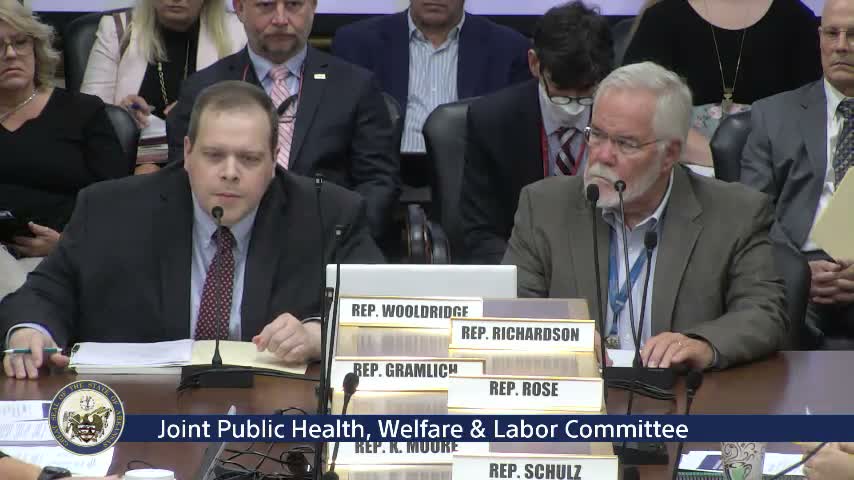
Matt Gilmore of the Arkansas Department of Health presented the 2022–23 biennial report on tobacco-settlement programs, saying community health screenings rose by about 8,000 and that grantees leveraged roughly $165,000,000 in outside funding over the two-year reporting period. He told the committee the payment the state receives from the national settlement is decreasing over time as smoking falls and estimated variability ‘‘probably 3 to $5,000,000 a year’’ in typical annual payment changes.
Bobby McGee, professor at UAMS and executive director of the Arkansas Biosciences Institute (ABI), described ABI performance funded in part by tobacco-settlement dollars. McGee said ABI received $12,700,000 from the settlement and generated $88,000,000 in extramural grant awards during the period, a leverage factor he calculated as $6.93 per dollar of settlement funding. He also cited long-term totals: ABI has attracted roughly $971,000,000 in extramural support over 22 years, supported about 300 research-related jobs on average and produced hundreds of publications and patent applications.
Committee members asked whether programs such as Trails for Life are grants and how the commission prioritizes funding. Gilmore confirmed Trails for Life is a competitive grant administered through the Department of Parks, Heritage and Tourism and said the Tobacco Settlement Commission reviews quarterly and biennial reports and makes recommendations every two years; ultimate funding is governed by statute and the governor and legislature.
Members also pressed on whether the drop in settlement receipts is driven by national trends or program activity. Gilmore said declines follow the settlement formula tied to tobacco sales and other factors, and that some programs adjust their metrics and indicators to demonstrate value as revenues decline. He agreed to provide more recent and disaggregated data on pregnant-women smoking rates and other measures when available.
Committee reaction: members praised the leveraging statistic as evidence of research value and suggested the commission and agencies continue to monitor metrics and consider reallocations as settlement revenues decline.
The committee did not take formal action on the report; presenters offered to provide follow-up materials requested by members.