Get Full Government Meeting Transcripts, Videos, & Alerts Forever!
Get email alerts on the Procurement Lighting topic
No spam. Unsubscribe anytime.
Bill to require three‑bid lighting specs draws industry opposition and fails for lack of a second
Summary
Representative Richmond McGrew's HB 16‑46, which would require a three‑bid spec from separate lighting agencies on public projects to increase competition, prompted strong industry opposition that argued existing procurement rules already promote competition; the motion died for lack of a second.
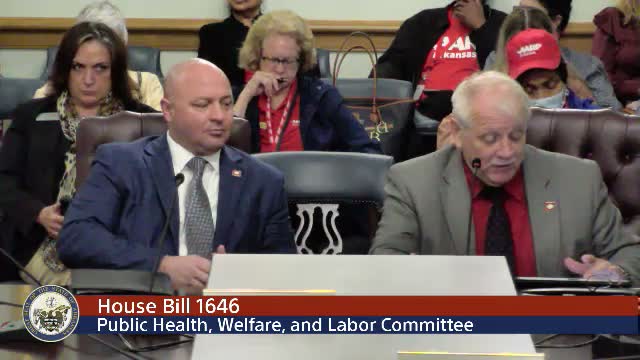
A measure aimed at forcing wider bidding by lighting agencies on public construction projects drew sharply divided testimony and failed for lack of a second in the Senate Public Health, Welfare and Labor Committee.
Representative Richmond McGrew introduced House Bill 16‑46, saying the bill simply requires a three‑bid specification from three separate lighting agencies when public money is used for lighting design, which he said would “allow competition” and be “good stewardship with the taxpayers’ money.” He said architects had reviewed the proposal and that the bill passed the House 98‑0.
Industry witnesses pushed back. Joshua Maddox, representing a lighting agency, told the committee existing state procurement laws and Division of Building Authority standards already provide multiple non‑proprietary specification options, allow equal‑product submissions and require maximum practicable competition. Maddox said the proposed bill could be redundant and in some circumstances restrict competition by limiting specification options.
Mike Holcutt of AGC and Clark Power Corporation told senators he had polled several firms and engineering/architectural firms and found opposition to the bill, naming multiple local firms that opposed the change. He and other witnesses said the problem the sponsor described either did not exist in their experience or already is addressed by procurement rules.
Representative McGrew said he had seen examples of projects where specifications effectively limited bidders and argued he would revise the bill if concrete counter‑examples were produced. When the committee moved to the motion phase, no senator seconded the motion and, for lack of a second, the measure failed to advance.
Outcome: HB 16‑46 died in committee for lack of a second; the sponsor said he would consider revisions and asked for examples documenting the problem.