Get Full Government Meeting Transcripts, Videos, & Alerts Forever!
Get email alerts on the Pharmacy Regulation topic
No spam. Unsubscribe anytime.
Senate committee advances protections for pharmacies in wholesaler termination disputes
Summary
SB 274 would require a statutory process before wholesalers can terminate pharmacies' access to controlled substances, aiming to add accountability and predictability for rural and small pharmacies affected by federal injunctive-relief settlement obligations. The committee passed the bill after stakeholder debate and testimony from wholesalers and pharmacy advocates.
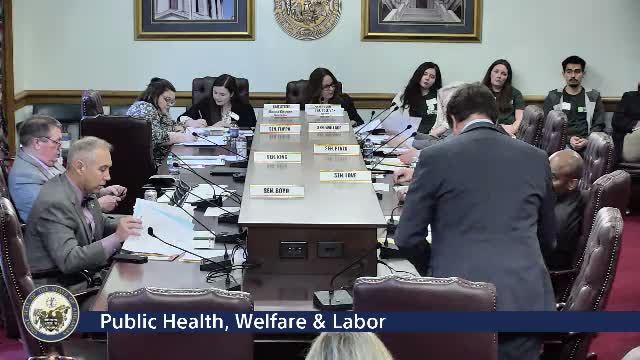
The Senate Public Health, Welfare and Labor Committee passed Senate Bill 274 following a day of testimony from pharmacists, wholesalers and lawmakers about disruptions to pharmacy supply caused by multi-state injunctive-relief settlement obligations.
Senator Jim Petty, the bill sponsor, described a case raised by a constituent whose pharmacy was abruptly cut off by a wholesaler under federal injunctive-relief terms associated with opioid litigation. SB 274 creates four statutory mechanisms and an administrative path that wholesalers must follow before terminating distribution, including a requirement to file a complaint or provide extended notice in non-disciplinary cases. Petty said the change is intended to provide transparency and fairness while preserving the ability to act against bad actors.
Representatives of the Healthcare Distribution Alliance (William Dane) testified in respectful opposition to some provisions, arguing that the draft's 120-day termination-without-cause requirement and other duties could conflict with DEA rules or the multisettlement injunctive-relief terms and expose wholesalers to legal uncertainty. Committee members pressed both sides on federal preemption, the role of the State Board of Pharmacy, and the practical effect on small, rural pharmacies.
Sponsor Petty said the bill is not intended to prevent emergency action by the Board of Pharmacy and that the measure aims to provide predictability and due process for pharmacies that otherwise lose supply with little notice. The committee passed the bill after debate; sponsor said he would continue working with stakeholders to refine language as needed.