Get Full Government Meeting Transcripts, Videos, & Alerts Forever!
Get email alerts on the Medicaid Waivers topic
No spam. Unsubscribe anytime.
DHS reports multiple Medicaid waiver renewals and an amendment to add slots and allow family caregivers to be paid
Summary
DHS briefed the committee on renewals of several 1915 waivers (Living Choices, Our Choices, 1915(b)/(c) packages) and an amendment that adds 3,000 community and employment support slots and permits parents/legal guardians to be paid caregivers when hired by approved providers after background checks and training.
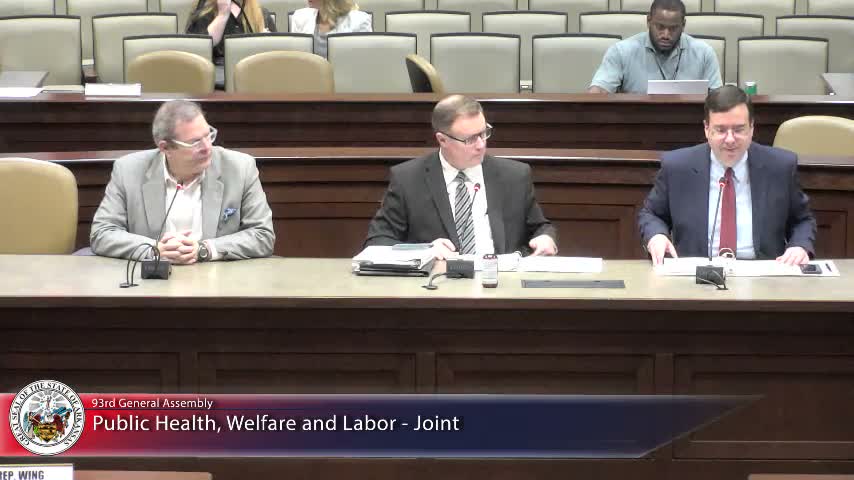
Mark White and other Department of Human Services officials updated the Public Health, Welfare and Labor Committee on several Medicaid waiver renewals and an amendment designed to reduce waiting lists and expand in‑home supports.
White said the Living Choices waiver (assisted living services for frail elderly and younger adults with physical disabilities) required technical edits requested by CMS; the department will return any substantive changes for committee review and separately promulgate a new assisted‑living rate expected later in the year. The House/committee record shows the current waiver package uses the existing rate pending that separate rate filing.
On the Our Choices waiver and related 1915(b)/(c) renewals, Elizabeth Pittman (Division of Medical Services) and Melissa Weatherton (Developmental Disability Services) said most edits were cleanup and that CareSource was added as a fourth pass contractor; Marshallese language materials were added to align with Department of Children and Families policy. DHS said the financial impacts were reviewed and included in current fiscal‑year budgeting.
Jay Hill described a community and employment support waiver amendment, approved by CMS in August, that adds 3,000 slots funded during the legislative session to eliminate the December 2020–21 waitlist. To address workforce shortages, the amendment allows parents and legal guardians to be paid caregivers if they are hired by an approved Medicaid provider, pass background checks and drug screens, and complete the same training as other employees. Hill said providers will employ those family caregivers and set pay rates, and DHS will begin outreach to waitlisted individuals immediately after committee concurrence.
Committee members asked for detail on how case‑by‑case exceptions will be evaluated for services that exceed budget caps; DHS said nurses will review requests, physicians may support applications, and temporary 60‑day extensions are available while independent assessments proceed. Senators also asked whether authorization periods would be extended for long‑acting drugs and about audit requirements for assisted‑living providers; DHS said audits were a state requirement and could be revisited with CMS approval.
Where votes or formal approvals were required, committee members approved rules 'as reviewed' without objection for multiple items during the hearing. DHS officials offered to provide carryforward and administrative‑cost breakdowns for specific programs on request.