Get Full Government Meeting Transcripts, Videos, & Alerts Forever!
Get email alerts on the Pdmp topic
No spam. Unsubscribe anytime.
Committee reviews PDMP rule updates; ADH says uploads are next-business-day and real-time work requires funding
Summary
The Department of Health presented updates to the Arkansas Prescription Drug Monitoring Program rules tied to 2017 and 2019 legislation. Members asked about penalties, access, noncompliance data and the feasibility and cost of moving to real-time reporting; ADH said uploads are currently next-business-day for pharmacies and pledged to provide follow-up data.
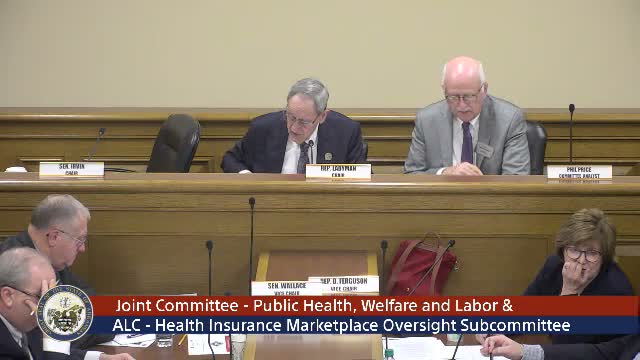
The Arkansas Department of Health told the Senate Public Health Committee it has revised PDMP rules to incorporate multiple 2017 and 2019 legislative changes, expand authorized PDMP users (including the Office of Medicaid Inspector General), and add provisions for data exchange and prescribing criteria.
Lars Xu, ADH general counsel, and Jamie Turpin, PDMP administrator, walked members through the amendments, which include mandatory usage provisions, reporting and a new definition alignment for hospice and palliative care with Arkansas Code 20-8-701. Turpin said some changes were driven by Acts passed in February 2017 and 2019 and by public comment received during the rulemaking process.
Committee members focused on enforcement, technology and access. Sen. Hammer asked how many prescribers are not complying with mandatory PDMP use; ADH said it did not have that number in the hearing but would follow up. On the question of whether the state has real-time reporting, Turpin said pharmacy uploads are next business day and veterinarians have 30 days to upload; she said the department has a contract with a vendor to add a module that ties prescriptions to dispensations and would provide a timetable when available.
Turpin said the PDMP currently supports data exchange with federal PDMPs and that the department is working toward EHR integration, funded partly by a CDC Overdose Data to Action grant. On penalties, ADH noted disciplinary action for failure to use the PDMP is handled by licensing boards under the 2017 act and that boards have rules or will bring rules addressing discipline.
What’s next: ADH agreed to provide the committee with numbers on noncompliance, how information provided to insurers is used, the technical and fiscal requirements for real-time reporting, and a list of entities that now have access to PDMP data.
Why it matters: The PDMP is a tool to reduce doctor shopping and improve prescribing oversight; members emphasized that while many states operate on a 24-hour upload schedule, moving to true real-time reporting involves technical capacity and funding decisions.