Get Full Government Meeting Transcripts, Videos, & Alerts Forever!
Get email alerts on the School Quarantine Testing topic
No spam. Unsubscribe anytime.
Committee hears hours of testimony on school‑quarantine and testing measures; one sponsor’s local‑control bill fails while a broader testing/immunity bill wins
Summary
Lawmakers debated competing approaches to quarantine rules, testing and exemptions — including shifting quarantine authority to local school boards, establishing proof‑of‑immunity exemptions, and setting state reimbursement rules for testing — with agency witnesses warning of costs and operational issues; one sponsor’s local‑control quarantine bill failed for lack of a motion, while a related, more comprehensive bill was later passed out as amended.
The committee’s longest discussion centered on several interconnected proposals about school quarantine standards, testing, proof of immunity and state support for required testing.
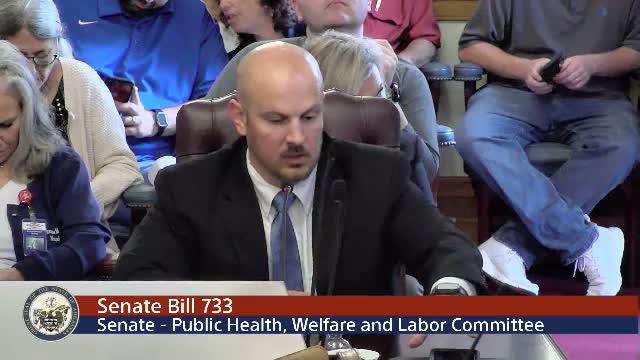
Local‑control proposal (sponsor identified in transcript as the sponsor of 7‑33): The sponsor urged moving quarantine authority from a top‑down Department of Health/Department of Education approach to local school boards, arguing that students have missed critical instruction and local boards better reflect parental preferences. "If we trust the school board so much for so many different issues... why don't we take down this top down Little Rock approach and instead empower each school board to know what's best for them and their children," the sponsor said.
Public testimony: Parents described children missing school days and academic harm. Melissa Koller said her 8th‑grade daughter had just six days of instruction in a month because guidance effectively functioned as law and limited when a negative rapid test would be accepted. "She had a negative test. She still can't go to school on Thursday," Koller testified, describing academic decline and lost instruction time.
Administrators and agencies: Dr. Mike Hernandez, executive director of the School Administrators Association, opposed shifting quarantine authority to school boards without guardrails, warning school districts lack ready access to public‑health expertise for future infectious threats. Matt Gilmore of the Department of Health recommended more frequent testing (at least twice weekly) if testing is used, and flagged uncertainty about natural‑immunity testing cadence.
Costs and funding: Alan McVay of the Department of Finance and Administration testified against the comprehensive testing provisions on cost grounds, estimating that weekly PCR testing across large employee pools over an extended period could reach hundreds of millions of dollars and saying ARPA restrictions may limit expense eligibility. McVay said DFA used a $100 average PCR cost in its calculation and warned of a potential $700+ million exposure if tens of thousands of employees required weekly testing.
Comprehensive bill and outcome: A later, more detailed bill presented by another sponsor added (1) proof‑of‑immunity options (antibodies, T‑cell response, positive test), (2) an explicit reimbursement mechanism using state or ARPA funds if insurance did not cover testing, and (3) a sunset date of 07/31/2023. That bill drew substantial public testimony, a non‑debatable motion for immediate consideration, and a committee voice vote; the chair announced the bill passed out of committee as amended. Separately, an earlier local‑control quarantine bill failed when no motion to advance was made earlier in the hearing.
What it means: The record shows a split between parents and some medical witnesses who want fewer quarantines and local authority, and administrators and state agencies who warned of legal, operational and fiscal risks. The comprehensive bill that passed includes reimbursement provisions, proof‑of‑immunity language and a sunset clause; DFA and DOH asked for more clarity on testing cadence, eligible costs and federal funding constraints.