Get Full Government Meeting Transcripts, Videos, & Alerts Forever!
Get email alerts on the Covid Response Rules topic
No spam. Unsubscribe anytime.
DHS seeks to keep pandemic-era Medicaid and telemedicine flexibilities in place as permanent rules
Summary
The Department of Human Services presented multiple rule packages to convert emergency pandemic flexibilities into permanent or time-limited rules, covering Medicaid continuous enrollment, telemedicine, prescreening suspensions, payment for COVID treatments, and waiver adjustments.
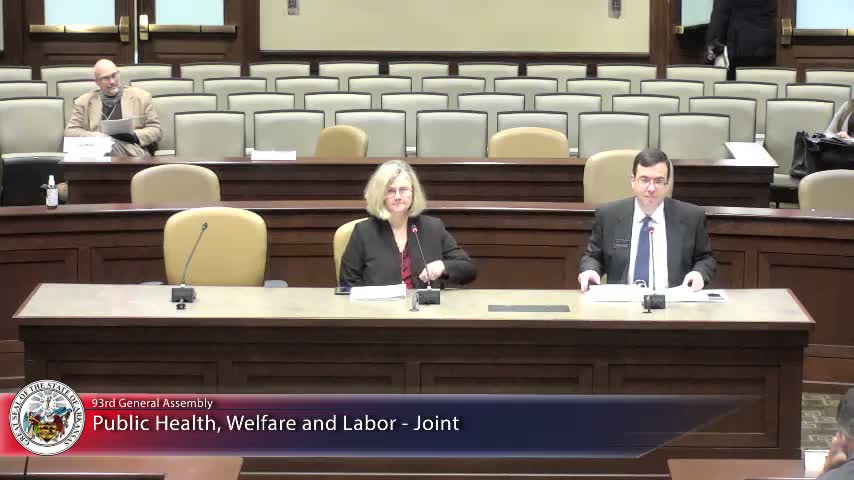
The Department of Human Services told the Senate Public Health, Welfare and Labor Committee that it has packaged pandemic-era flexibilities into a permanent set of rules with specific sunset dates tied to the federal public health emergency or end-of-year deadlines.
Mark White explained DHS consolidated measures it had implemented under emergency rule into discrete rule packages so services and providers would not abruptly lose pandemic flexibilities when the state emergency ended. "We put all this together into 1 proposed rule...and as I said, the pieces that tie back to the changes made by the federal government and their requirements, most of those things will expire with the end of the federal public health emergency," White said.
Key provisions reviewed by the committee included: continuing temporary Medicaid enrollment and eligibility flexibilities required by federal enhanced match rules; suspending certain pre-screening requirements for nursing-home admissions; allowing telephone assessments in place of some in-person assessments; permitting critical access hospitals to use swing beds; covering payment for monoclonal antibody treatment and exempting COVID testing from normal lab-cost limits; extending telemedicine flexibilities through Dec. 31 with an intent to make many of them permanent; and administrative changes to the Living Choices assisted-living waiver to streamline renewals and appeal procedures.
Elizabeth Pittman, director for the Division of Medical Services, described a technical correction related to placing medication-assisted treatment language in the correct pages of the Arkansas State Plan; she said the change did not alter coverage and that DHS expected CMS approval before finalizing the rule.
Committee members raised no objections; several rules were recorded as "stood as reviewed." DHS said it expects many of the flexibilities to either end with the federal emergency or be transitioned to permanent rules by the end of the year.