Get Full Government Meeting Transcripts, Videos, & Alerts Forever!
Get email alerts on the Cannabis Testing topic
No spam. Unsubscribe anytime.
Arkansas committee hears Oklahoma model for medical‑marijuana quality assurance after consultant cites lab problems
Summary
A consultant described Oklahoma’s state‑run quality‑assurance testing and alleged lapses in some private Oklahoma labs; Arkansas lab operators responded that Arkansas requires ISO accreditation, routine proficiency testing and state action limits for contaminants.
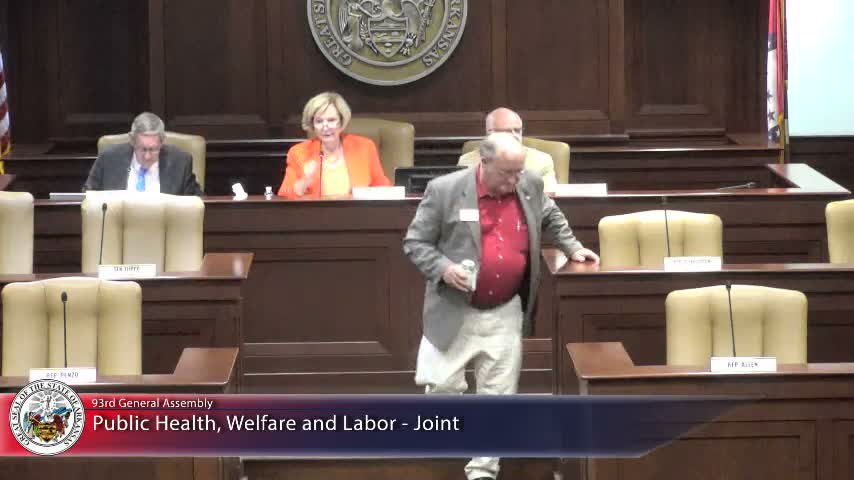
The Senate committee reviewed medical‑marijuana quality controls and interstate risks after a presentation by Clay Bullard, a consultant who has worked with Oklahoma’s medical marijuana authority.
Bullard described Oklahoma’s effort to create a state‑level quality assurance laboratory to validate testing across commercial labs. He warned that in markets with many licensees and labs — he cited roughly 13,000 Oklahoma licensees and widespread production — inconsistencies can arise when no secondary validation checks exist, and he recounted a case in which a longstanding Oklahoma lab allegedly produced certificates of analysis without operating machines. "When you have 80% of the product estimated to be leaving the state," Bullard said, states should ensure product safety and guard against adulteration.
Arkansas laboratory representatives disagreed with the characterization that Arkansas lacked oversight. Brandon Thornton of Steep Hill Arkansas said state rules required ISO accreditation for laboratories, proficiency testing, quarterly third‑party checks and Department of Health action limits on pesticides and contaminants. Thornton said Arkansas labs test for 59 pesticides, use traceable weight systems, and operate under department regulations that set strict action limits (parts per million) rather than tolerances.
Committee members asked how states should handle inter‑laboratory variance and whether Arkansas needed an Oklahoma‑style QA laboratory; Bullard said a state QA lab can randomly sample dispensaries and labs, validate certificate of analysis results, and test seed‑to‑sell tracking systems to detect tampering. Arkansas officials noted Arkansas’ smaller program scale and existing oversight measures but agreed to consider ways to improve inter‑lab comparability.
No regulatory changes were adopted during the session. The committee discussed the potential value of adding external QA checks to ensure lab calibration, consistent potency reporting and contamination limits.