Get Full Government Meeting Transcripts, Videos, & Alerts Forever!
Get email alerts on the Covid 19 Pediatrics topic
No spam. Unsubscribe anytime.
Arkansas health officials warn Delta driving rise in child COVID hospitalizations; hospitals urge vaccination
Summary
State health officials and Arkansas Children's Hospital told a Senate committee that the Delta variant is now predominant in Arkansas, coinciding with a sharp rise in pediatric hospital and ICU admissions; hospital leaders urged vaccination and layered protections to avoid overwhelming staff capacity.
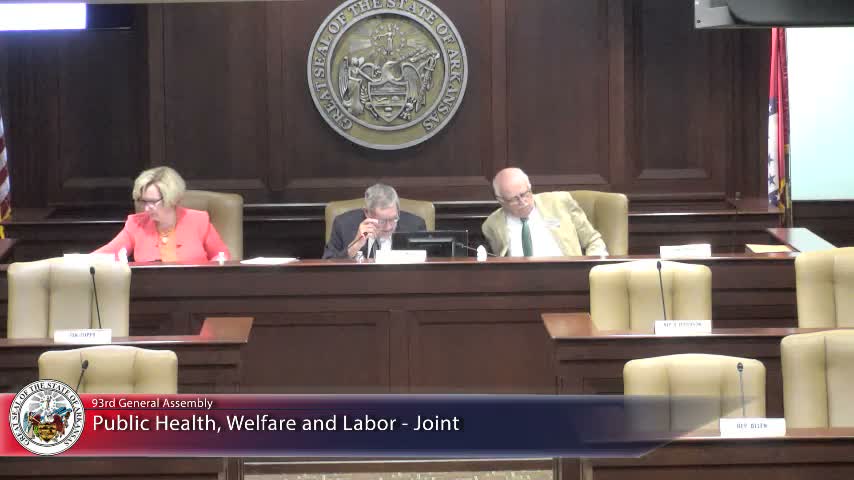
State health officials and pediatric hospital leaders told the Senate Public Health, Welfare and Labor Committee on Aug. 2 that the Delta variant has become the dominant strain in Arkansas and is linked with rising illness among children.
"We began seeing the Delta variant increase in May and June, and now it is the predominant variant. It is 86 percent of all the sequences that we obtained for variants in the state," Jennifer Dillehay, chief medical officer for the Arkansas Department of Health, told committee members. She said the state was reporting 19,739 active cases, 1,220 people hospitalized and 42 deaths on the day of the briefing.
The officials highlighted steep increases in pediatric cases and severe illness. "For children who are 0 through 18 years of age, we had a 267 percent increase between April and July," Dillehay said, and ICU admissions for children rose 275 percent in the same period. Arkansas Children's Hospital President and CEO Marcy Doterer reported 21 pediatric patients hospitalized with COVID-19 that day, including eight in the hospital's ICU and five on ventilators; 16 of those 21 were eligible for vaccination and unvaccinated.
The nut of the agencies' testimony was a push for layered mitigation: vaccination for eligible people, masking, hygiene, distancing and improved ventilation. "I think we need to have both" vaccines and masking, Dillehay said, noting that breakthroughs can occur and that masks help reduce transmission even among vaccinated people.
When asked about early outpatient treatment for children, Dillehay said monoclonal antibodies are FDA-authorized for patients 12 and older and that specific treatment decisions should be made by treating clinicians. Arkansas Children's said monoclonal antibodies are available for 12-and-up patients who meet eligibility criteria and that the hospital offers bedside vaccination, with parental consent, to eligible patients and family members.
Doterer also flagged an unusual summer surge of other respiratory viruses, including RSV, reporting more than 500 positive RSV tests in July and noting staff shortages as the primary constraint on capacity. "We're approaching staff capacity, not bed capacity," she said, adding that operating all licensed beds would require many more nurses.
The committee pressed officials about school masking policy, sequencing protocols for identifying variants, and whether immunity from prior infection obviates vaccination; Dillehay said sequencing is performed on PCR samples sent to public health labs and that antibody testing is not a reliable measure to defer vaccination because neutralizing antibody thresholds for protection are not defined.
The committee did not take formal action on policy there; members sought additional local breakdowns of case data and asked hospitals to provide more detail on clinical care pathways.
Provenance: ADH presentation and Q&A; Arkansas Children's presentation (transcript segments starting SEG 031 through SEG 1512).