Get Full Government Meeting Transcripts, Videos, & Alerts Forever!
Get email alerts on the Covid Hospitals topic
No spam. Unsubscribe anytime.
State health officials and hospitals report Delta‑driven surge, pediatric uptick and strained staffing
Summary
State health and hospital representatives told the Senate committee that the Delta variant is driving a rise in infections among younger Arkansans, hospitalizations remain high though ICU capacity has risen with federal funds, and about 90% of severe outcomes are among unvaccinated people.
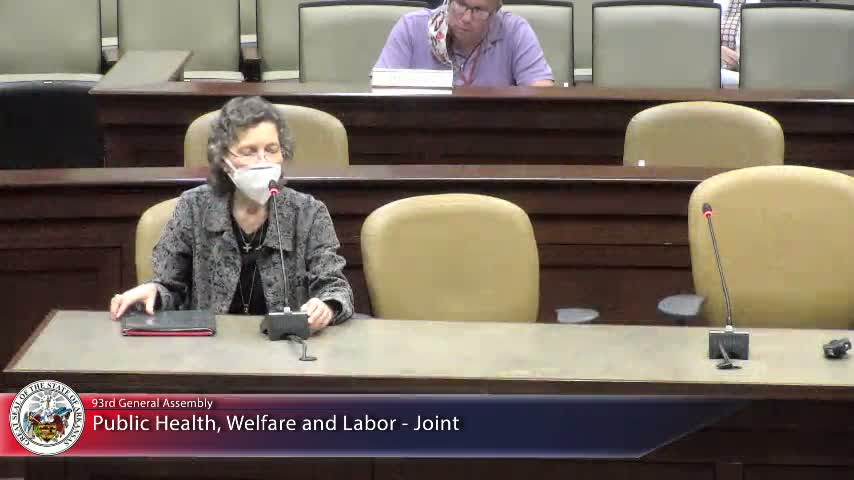
State and health‑system officials briefed the Public Health, Welfare and Labor Committee on Sept. 8 about the Delta variant’s impact on Arkansas communities and hospitals.
Dr. Jennifer Dillehay of the Arkansas Department of Health presented vaccination and seven‑day case‑rate charts by age group showing higher immunization among older adults and rising case rates among children under 12 and adolescents 12–18. She told lawmakers that hospital pediatric admissions have increased and July saw the highest pediatric hospitalizations of the year; she agreed to provide additional hospitalization and mortality breakdowns on request.
Joe Thompson of the Arkansas Center for Health Improvement said the Delta variant produced a steep July–August rise and emphasized the value of zip‑code and school‑district level data so local leaders can tailor prevention efforts. "The higher your vaccination rate, the lower the risk is going to be in your school district," he said, and he urged use of local trends to direct responses.
Beau Ryle and Jodi Ann Trit of the Arkansas Hospital Association reported hospital capacity numbers (1,239 confirmed COVID inpatients at 10:30 a.m.; recent peaks in ICU and ventilator use) and said federal American Rescue Plan funds ($129 million allocated for recruiting and retaining health care workers) have been used to add ICU and med‑surg beds but staffing remains the limiting factor: travel nurse demand has surged regionally.
Committee members asked about testing (PCR cycle thresholds and antigen vs. PCR reporting), therapeutics and treatment access. Dillehay said Arkansas uses FDA‑authorized tests and counts both antigen and PCR positives in case totals; Thompson and hospital representatives encouraged early use of monoclonal antibody therapy for patients beginning to deteriorate. When representatives raised convalescent plasma, Thompson said randomized clinical trials did not demonstrate consistent benefit, while monoclonal antibodies have shown effect if given early.
The panel repeatedly emphasized vaccines’ protective role. Thompson told the committee that roughly 90% of recent hospitalizations, ventilator use and deaths are among unvaccinated people and said vaccines remain the primary tool to reduce severe outcomes.
No committee vote or regulatory action was taken; the exchanges produced follow‑up requests for additional data (age‑specific hospitalization and mortality figures, PCR cycle distributions, and therapeutic availability).