Get Full Government Meeting Transcripts, Videos, & Alerts Forever!
Get email alerts on the Medical Board Appointments topic
No spam. Unsubscribe anytime.
Committee approves bill to reconstitute state medical board after extended debate
Summary
Senate Bill 570 would reconstitute the State Medical Board by reallocating appointment authority among the governor, the Senate and the House; supporters said the change would equalize representation while opponents warned of mass turnover and lost institutional knowledge. The committee approved the bill after a roll call.
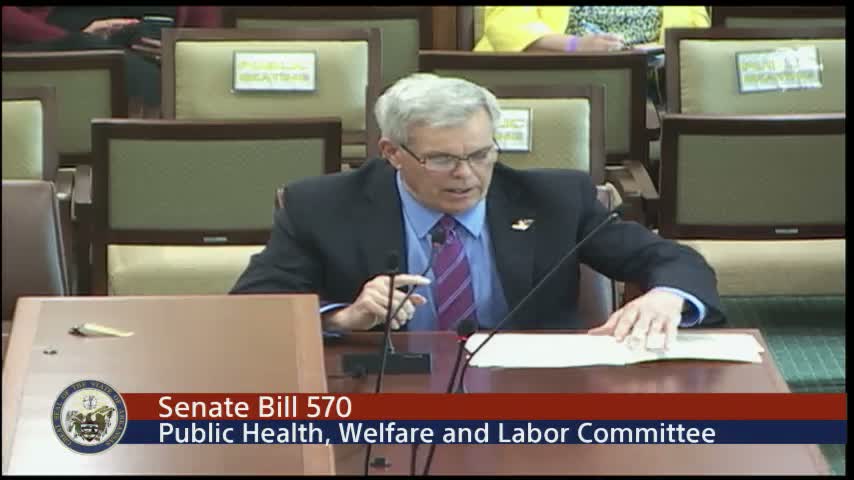
Senator Dan Sullivan (District 21) presented Senate Bill 570, saying the measure would alter appointment procedures to the State Medical Board so that the governor, the Senate and the House each make an equal number of appointments. "This bill is only about reconstitution of the board to allow appointments by the governor of the senate and the house," Sullivan said, arguing that boards have grown influential and rebalancing appointments would improve equity.
Sullivan and other proponents framed the change as a move toward co‑equal branch representation and said it would allow reappointments so continuity is possible. "Nothing precludes...the reappointments of the current board members," Sullivan said, adding the bill "gives the house 4 or 5 appointments, the senate 5 appointments, and the governor 5 appointments."
Multiple witnesses raised concerns. Bruce Campbell, senior adviser to Governor Hutchison, said the governor's office currently appoints the board in total and cautioned that replacing many members at once could risk losing institutional knowledge. "Our only objection...concerns the appointments," Campbell testified. Matt Gilmore of the Department of Health also told the committee that institutional knowledge matters and that the board handles hundreds of complaints and rule implementations that benefit from continuity.
Representative and physician Dr. McGee, who identified himself as a state representative and a practicing physician, testified strongly against the appointment changes. He said the medical board has rigorous processes for vetting and regulating physicians and warned the proposed appointment structure would undercut long‑standing practices and risk losing experienced board members.
Senator Sullivan said the bill does not change board authority but aims to bring equal appointments and improve Arkansas' national rankings on health policy. After extended questioning and public testimony the committee took a roll‑call vote. The transcript records named votes in committee (for example, Senators Hester, Wallace, Davis, Hammer, Sullivan, Gilmore and Vice Chair Flippo were recorded as "Aye" and Chair Bledsoe recorded "No"). The committee approved the bill and it was passed out of committee.