Get Full Government Meeting Transcripts, Videos, & Alerts Forever!
Get email alerts on the Medicaid Reimbursement topic
No spam. Unsubscribe anytime.
Senate committee approves bill to set Medicaid reimbursement for vagus nerve stimulators amid DHS caution
Summary
HB 1810, presented by Sen. Brianne Davis, would establish device reimbursement rates for vagus nerve stimulation therapy under Arkansas Medicaid; industry witnesses cited large reductions in ER visits and hospitalizations, while DHS warned the change likely requires a CMS state plan amendment with potential federal review of hospital supplemental payment systems.
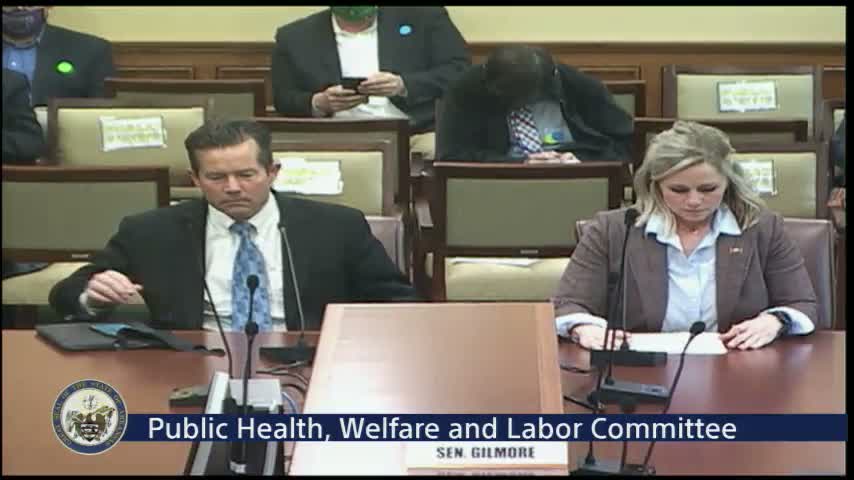
The Public Health, Welfare and Labor Committee approved HB 1810 after testimony from the sponsor, industry representatives and Department of Human Services officials.
Sen. Brianne Davis described the bill as establishing device reimbursement rates for vagus nerve stimulation therapy devices by setting reimbursement equal to a percentage of device cost or aligning with Medicare reimbursement under an amendment. An industry representative representing the device manufacturer said the lack of separate device reimbursement has constrained access and prompted some hospitals to suspend procedures.
"Because of the low Medicaid reimbursement rates, people aren't receiving the care that they need," Sen. Davis said in closing remarks, citing claims that the therapy corresponded to a "99 percent decrease in ER visits" and substantial reductions in hospitalizations and inpatient days among patients who received the device.
Mark White and Janet Mann from the Department of Human Services urged caution. White said granting the reimbursement could set precedent for other implantable devices and that implementing the bill may require a CMS state plan amendment. "As part of that, it would necessarily open up for CMS review our entire system of reimbursement for hospitals, including the access tax and the access payments that we make to hospitals," White said, explaining that federal review could challenge longstanding aspects of supplemental payments.
Committee members asked whether other states had taken similar steps; DHS said it had not identified a state that changed reimbursement methodology for a single device. After discussion and no audience opposition, the committee approved the bill by voice vote.
The committee record shows a balance between access concerns urged by sponsors and industry witnesses and fiscal and federal‑compliance cautions from DHS. The bill moves forward with the committee’s approval; any change to Medicaid reimbursement likely will require additional DHS analysis and federal approval before implementation.