Get Full Government Meeting Transcripts, Videos, & Alerts Forever!
Get email alerts on the Medicaid Access topic
No spam. Unsubscribe anytime.
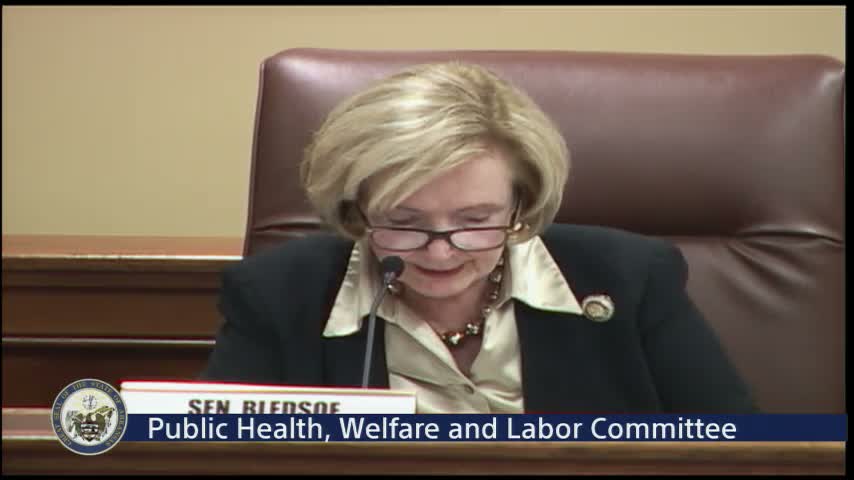
Panel advances bill removing Medicaid referral requirement for APRNs after amendments
Summary
House Bill 12‑54, which would allow advanced practice registered nurses (APRNs) to be recognized as Medicaid primary care providers by removing a referral requirement, passed the committee after amendment to prevent APRNs from leading patient‑centered medical homes.
Representative Jeff Wardlaw presented House Bill 12‑54 to remove the Medicaid referral requirement that can limit advanced practice registered nurses (APRNs) from being recognized as primary care providers. He said the bill’s core change is to allow APRNs to be recognized by Arkansas Medicaid without the prior referral requirement, and emphasized the sponsors had removed earlier scope‑of‑practice language and added an amendment prohibiting APRNs from heading patient‑centered medical homes.
"This bill gives them no more authority than they had today. It only removes the referral process to see a Medicaid patient," Wardlaw said in closing remarks; he told senators the House had already amended the bill to address concerns about the patient‑centered medical home model.
The committee heard extensive testimony from both sides. Supporters — including medical students and an economics researcher — argued that Arkansas faces provider shortages in many counties and that APRNs are more likely to practice in rural areas, improving access for Medicaid patients who struggle to find primary care. David Mitchell, an economics professor, cited federal HRSA designations showing many Arkansas counties are medically underserved and told the committee he maintains a database of peer‑reviewed studies indicating nurse practitioners provide effective primary care.
Opponents — including family physicians and leaders of medical societies — warned that the measure could weaken the patient‑centered medical home model, that APRNs have different training pathways than physicians, and that Medicaid program authority and reimbursement structures would be affected. Dr. Dennis Yelvington, a family physician from Stuttgart, said the bill "would be a weakening of the patient‑centered medical home in the state of Arkansas" and raised concerns about continuity and complexity of care for Medicaid patients.
Department of Human Services staff supplied county‑level caseload data and said the numbers represent slots physicians reported they could take; staff noted limitations in reporting (for example, clinic‑level panels can make county numbers look larger and physicians do not always update panels promptly). Committee members pressed DHS for follow‑up information on how often patients are turned away when calling a listed physician, and DHS staff agreed to provide additional data.
After debate and the adoption of the amendment removing the patient‑centered medical home leadership provision, the committee moved and passed HB12‑54 "as amended." The transcript records a roll call for this measure; the committee chair asked Mr. Price to call the roll and the chair then declared the bill passed. The transcript does not include a consolidated numeric tally in the text provided here.
The bill now proceeds according to the legislative calendar and any implementing changes to Medicaid procedures would be worked out with DHS if enacted.