Get Full Government Meeting Transcripts, Videos, & Alerts Forever!
Get email alerts on the Telemedicine topic
No spam. Unsubscribe anytime.
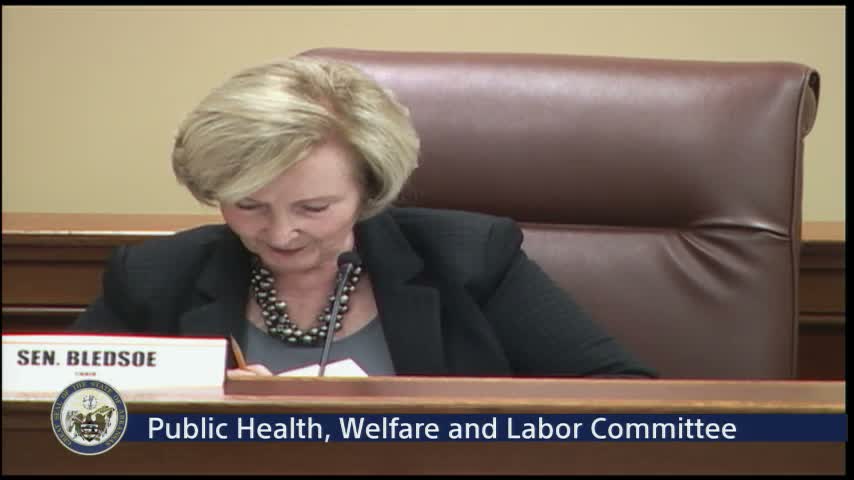
Senate committee approves telemedicine bill after heated debate over audio-only visits and medical-record definition
Summary
The Senate Public Health, Welfare and Labor Committee approved HB 10-63 to preserve telemedicine access after the governor—s emergency order, including disputed language on audio-only visits and what qualifies as a medical record; supporters said the bill keeps Arkansas aligned with most states, opponents warned the amendment weakens patient protections. The bill passed on a voice vote.
Senator Bart Hester presented HB 10-63 to the Senate Public Health, Welfare and Labor Committee as a measure to preserve telemedicine access put in place under the governor—s COVID-19 emergency orders. Hester said the bill aims to ensure telemedicine options, including audio-only care, remain available when the emergency order ends.
Why it mattered: The committee—s debate focused on whether the amended bill would permit —audio-only— visits as a way to establish a physician-patient relationship and what would count as a patient—s medical record. Supporters argued that allowing clinicians to use their judgment and make audio-only visits eligible would preserve access in rural and underserved areas. Opponents warned that the amendment—s language left the definition of "medical record" unclear and could allow forms or patient-completed questionnaires to substitute for clinician documentation.
Industry and patient-access views: John Burris of Capital Advisors Group, representing Teladoc, told the committee the goal was to codify the governor—s emergency proclamation and said uncertainty over the statutory definition of a health record was the reason the industry asked the committee to clarify the law. "We believe the governor—s emergency proclamation is good policy. We would like to see that put into law," Burris said. Kyle Zebley of the American Telemedicine Association said Arkansas has been difficult for telehealth operators and that the amendments would help the state "vault ahead to where 49 other states are now."
Medical-society concerns: Scott Smith of the Arkansas Medical Society said his group supported the House version but opposed the Senate amendment because it appeared to allow use of patient-generated questionnaires, texts or other non-clinician-maintained documents in ways that could undermine the standard of care. "We are supportive of telephone use as long as there—s a real medical record maintained by a physician or other licensed health-care professional," Smith said.
House sponsor—s defense: Representative Deborah Ferguson, who worked on the House bill, said the House language permitted audio-only visits only when the clinician had access to the patient—s medical record—either because the clinician already treats the patient or because records could be obtained electronically—and accused outside interests of attempting to "hijack" the bill in the Senate with amendments she did not expect.
Outcome and next steps: After extended questioning and public testimony from industry and medical groups, the committee voted by voice to pass HB 10-63. Senator Hester said he would not run the bill on the Senate floor until he and the House sponsor resolved outstanding sponsor and amendment questions. The bill passed the committee and will move forward to the next stage of the legislative process.
What remains unresolved: Committee members requested clarity on who defines a legal "medical record" (agency rule or statute) and how payment parity and standard-of-care rules would be enforced once the emergency order ends.