Get Full Government Meeting Transcripts, Videos, & Alerts Forever!
Get email alerts on the Health Professions Scope topic
No spam. Unsubscribe anytime.
Committee rejects SB86 but approves companion clinical‑supervision bill for athletic trainers
Summary
The committee voted down SB86, which would have redefined 'athlete' to include military, law enforcement and rescue personnel, but approved a negotiated compromise (House Bill 12‑59) allowing athletic trainers to practice in clinical settings under on‑site physician supervision; testimony included competing safety and scope-of-practice claims from athletic trainers and physical therapists.
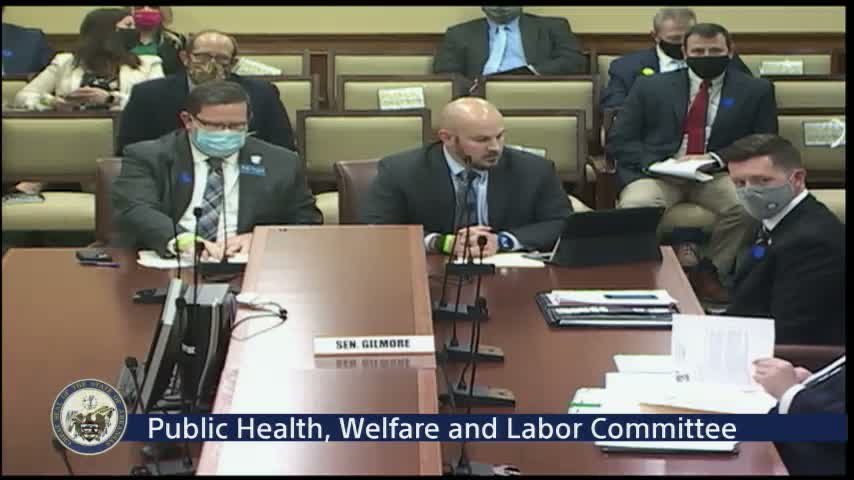
The Senate Public Health, Welfare and Labor Committee defeated Senate Bill 86, which would have broadened the Arkansas Athletic Trainers Act to classify certain military, law enforcement and rescue personnel as "tactical athletes," but approved a related compromise, House Bill 12‑59, that allows physicians to supervise athletic trainers in clinical settings under specified conditions.
Sponsor Senator Gardner described SB86 as a limited change to recognize activities tied to annual physical training for law enforcement, military and rescue services and said the bill would allow athletic trainers to apply existing skills to those tactical-athlete populations. Jonathan Elrod, president of the Arkansas Athletic Trainers Association, testified the bill would not expand clinical competencies and emphasized that athletic trainers would remain under physician direction. Supporters cited federal and other-state examples, and an educator noted current accredited master's-level AT programs.
Opponents from the Arkansas Physical Therapy Association—Bradley Phillips (lobbyist) and Beau Renshaw (legislative chair)—urged rejection of SB86 as drafted. They argued that physical therapists have a different (doctorate) clinical education suited to outpatient rehabilitation and warned redefining "athlete" could permit athletic trainers to deliver clinical-rehab services in settings not regulated like outpatient PT clinics. They pointed to workforce distribution concerns (roughly 300 ATs statewide and limited AT access in schools) and urged collaboration via the Allied Healthcare Professionals Coalition rather than a broad statutory redefinition.
Committee questioning focused on oversight and scope: senators asked whether SB86 would permit athletic trainers to open independent clinics, whether data supports improved outcomes in other jurisdictions, and how insurance payers (including TRICARE) would treat services. Witnesses said current statute requires physician direction for ATs and that recognition under insurance is a separate issue; they cited examples of federal use (e.g., military training installations) and existing data claims.
After debate and public testimony, the committee took a motion on SB86; the chair announced the motion to pass failed on a voice vote and the bill did not advance. Representative Lee Johnson later presented House Bill 12‑59 as a negotiated compromise to permit on‑site physician supervision of ATs in clinical settings; the committee adopted an amendment and passed HB12‑59 by voice vote.
The transcript shows contested, technical testimony from both sides. The committee's actions split the difference: rejecting a broad statutory redefinition while approving a narrowly negotiated measure to allow physician-supervised clinical practice for ATs.