Get Full Government Meeting Transcripts, Videos, & Alerts Forever!
Get email alerts on the Maternal Child Health topic
No spam. Unsubscribe anytime.
Committee backs bill allowing UAMS to set up in‑state breast‑milk bank
Summary
The committee approved a bill enabling UAMS to establish a breast‑milk bank and a fund; UAMS and neonatal specialists told senators donor milk is a medical therapy for premature infants and that Arkansas currently spends about $800,000 yearly buying donor milk out of state.
Representative Pilkington asked the Senate Public Health, Welfare and Labor Committee to authorize establishing a breast‑milk bank at the University of Arkansas for Medical Sciences and to create a related fund. She emphasized the bill does not appropriate state funds; it authorizes the entity and the fund.
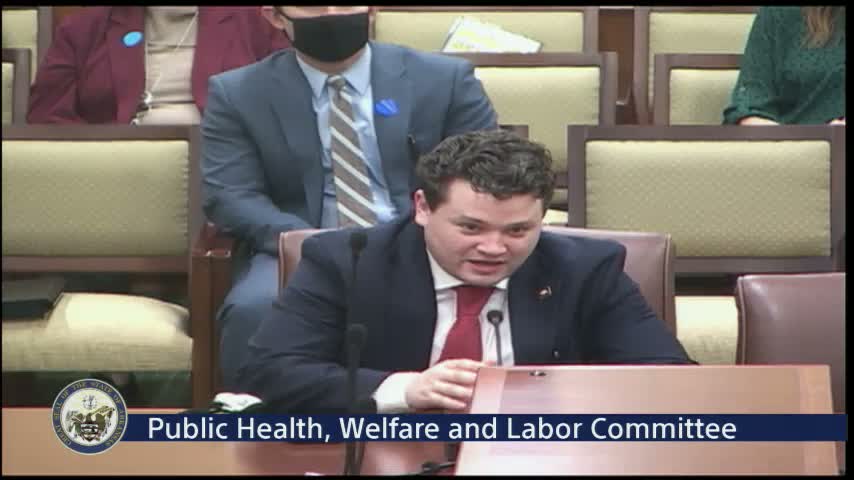
Presenters from UAMS and Arkansas Children's Hospital — Tanya Johnson (director of nutrition services, UAMS), Dr. Misty Vermoni and Dr. Elizabeth Kim (neonatologists) — told the committee donor milk is a medical therapy for premature infants, reducing the risk of necrotizing enterocolitis and other severe complications. They described how a milk bank would operate: local drop‑off depots, central pasteurization at UAMS, extensive donor screening and testing, and distribution to hospitals statewide.
Panelists said many mothers in Arkansas want to donate but currently lack convenient in‑state options; UAMS estimated its monthly donor‑milk purchases at roughly $10,000–$15,000 depending on census and said hospitals across the state spend about $800,000 a year buying milk from out of state.
Sen. Hammer asked about logistics and whether an in‑state bank could be revenue‑neutral; panelists said the bank should generate savings over time by keeping purchases in the state and improving availability for neonatal care.
The committee moved a "do pass" motion and approved the bill by voice vote.
Next steps: the measure will proceed through the Senate process; the bill contains no state funding in its current form.