Get Full Government Meeting Transcripts, Videos, & Alerts Forever!
Get email alerts on the Reproductive Health topic
No spam. Unsubscribe anytime.
Committee advances ‘Every Mom Matters’ bill after hours of testimony and sharp public opposition
Summary
The committee advanced HB 1195, the Every Mom Matters Act, which would require a free resource‑access assistance call for women seeking abortion and offer follow‑up services; sponsors cited studies estimating cost at $1.2–$1.5 million and projected effects, while opponents said the program forces women to call nonmedical advisers and that existing services already exist.
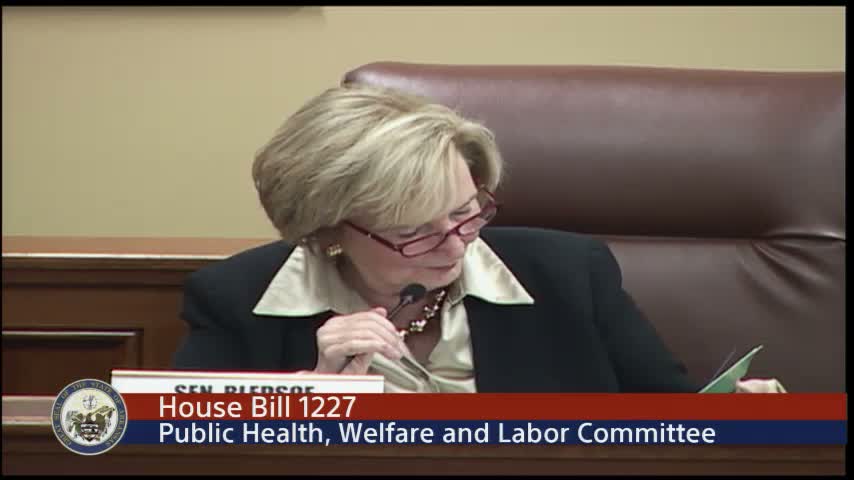
Representative Jim Dodson introduced House Bill 11 95, the Every Mom Matters Act (EMMA), telling the Senate Public Health, Welfare and Labor Committee the bill “reduces abortions by making sure every woman obtaining an abortion in Arkansas knows about the resources both public and private available to her to support her pregnancy and parenting should she decide not to have an abortion.” Dodson said the program would provide a free resource‑access assistance offer via a toll‑free number and follow up services through a child’s second birthday.
Dodson presented estimated implementation costs “between 1.2 and $1,500,000,” based on comparable programs in other states, and asserted that data from other states shows that “if women are fully informed, 1 third will decide to keep their babies.” He said full implementation in Arkansas could result in roughly “a thousand babies saved annually,” and proposed a target implementation date of Jan. 1, 2023.
A member of the committee expressed public‑policy support during questioning, calling the bill “beautiful” and saying it should reach across the aisle because it requires only a short telephone contact to inform women of resources.
Karen Musick, cofounder of the Arkansas Abortion Support Network, testified at length in opposition. Musick said her group assists Arkansans seeking abortion services and that clients had already been provided information; she said the bill “is doing nothing other than forcing a woman who wants an abortion to make a call to nonmedical professionals to share their advice.” Musick read multiple client stories describing financial instability, health complications, abusive partners, and other circumstances, and argued the bill would not provide new services for many women who need medical care and immediate clinic access.
After closing remarks by supporters, the committee moved and advanced the bill by voice vote. The transcript records the bill’s passage by voice vote but does not provide a roll‑call tally.
Next steps for the bill (committee amendments, fiscal notes or further legislative scheduling) were not recorded in the hearing transcript.