Get Full Government Meeting Transcripts, Videos, & Alerts Forever!
Get email alerts on the End Of Life Care topic
No spam. Unsubscribe anytime.
Committee approves 'Simon's Law' requiring parental consent before DNR orders for minors
Summary
The Senate Public Health, Welfare and Labor Committee voted to send House Bill 11 16, 'Simon's Law,' forward after Rep. Jim Dodson said it would bar hospitals or providers from placing do‑not‑resuscitate orders on minors without parental or legal‑guardian consent.
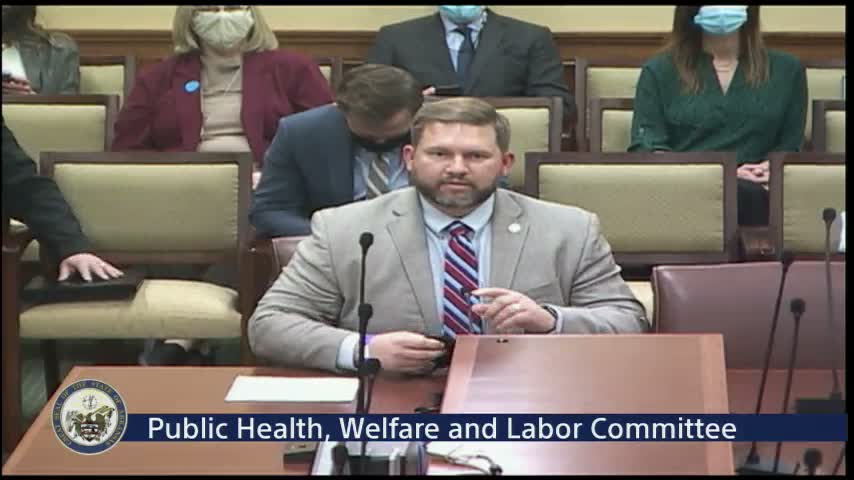
State Rep. Jim Dodson formally presented House Bill 11 16 — called "Simon's Law" — to the Senate Public Health, Welfare and Labor Committee, saying the measure would require a parent or legal guardian to consent before a health provider places a do‑not‑resuscitate (DNR) order on a minor.
Dodson said the bill responds to a 2010 Missouri case in which a newborn named Simon died after hospital staff applied a futility policy and a DNR order without parental knowledge; he told the committee he drafted the Arkansas measure after seeing similar laws adopted in other states and that the bill passed the House unanimously (96‑0).
In questions from Sen. Hammer, Dodson clarified that the bill is not intended to apply to minors who are not in a parent's or guardian's custody; when a child is in the custody of the Department of Human Services or the Division of Corrections, Dodson said, the department would be responsible under existing law and the measure points to the Arkansas Health Care Decisions Act for gaps.
Following the presentation and questions, Sen. Hester moved a "do pass" motion, seconded by Sen. Davis. The committee approved the bill by voice vote.
The committee recorded no public opposition at the table during the hearing. Next steps: the bill will proceed through the Senate committee process as scheduled.