Get Full Government Meeting Transcripts, Videos, & Alerts Forever!
Get email alerts on the Sb155 Lilas Law topic
No spam. Unsubscribe anytime.
Senate committee advances “Lila’s Law” to bar transplant denials based solely on disability
Summary
The Senate Public Health, Welfare and Labor Committee voted unanimously to give a do-pass recommendation to Senate Bill 155, “Lila’s Law,” which would prohibit denying organ-transplant consideration, waiting-list placement or insurance coverage solely because of a person’s disability and create an expedited appeal process.
A Senate committee on Monday advanced Senate Bill 155, known as “Lila’s Law,” after family members and disability advocates described cases in which people with disabilities were not referred for transplant evaluation.
Senator Davis, sponsor of the bill, told the Public Health, Welfare and Labor Committee the measure would prohibit providers, insurers or hospitals from deeming a person ineligible for a transplant, refusing referrals for evaluation, placing a person at lower priority on a waiting list, or denying coverage on the sole basis of a mental or physical disability. The bill would also require reasonable modifications to permit participation unless a provider shows an undue burden or a fundamental alteration of services.
The bill, Davis said, preserves clinicians’ ability to assess medical eligibility: a person must meet the same essential eligibility requirements as others but may not be excluded solely because of a disability. Davis also said the measure would create a faster legal path for people who allege they were denied a transplant because of disability alone.
Family testimony was central to the hearing. Lainie (who said her legal name is Elaine) Morrow, who identified herself as Lila’s mother, described her daughter’s cardiac condition and said providers initially told the family a transplant was not an option; Morrow said the bill would ensure families have recourse and that people with disabilities are at least considered for evaluation. Morrow said the incident occurred when the family lived in Oklahoma City and that it left them with no practical option to challenge the decision at the time reported in the hearing.
Dennis Dixon, who identified himself as a person with Down syndrome, told the committee people with disabilities should not be labeled or pushed aside and urged lawmakers to pass the bill so members of the disability community would not be written off when it comes to medical care.
Katie Sarsa, president of the Down Syndrome Advancement Coalition and site director for Gigi’s Playhouse in Little Rock, told the committee she had spoken with families statewide and with UNOS (United Network for Organ Sharing) and said UNOS rules do not bar transplants solely on the basis of disability. Sarsa and other witnesses said the main obstacle is preliminary gatekeeping by providers who do not refer patients for evaluation.
Thomas Nichols, Legal Director at Disability Rights Arkansas, testified that the bill would codify and clarify protections found in the Americans with Disabilities Act and make enforcement more predictable and accessible at the state level when federal enforcement is slow or unavailable.
Senator Hammer asked whether the bill’s provision directing courts to take certain cases up would face pushback from the judiciary; Davis said she had not received such pushback and believed the bill addresses expedited handling where medical urgency requires it.
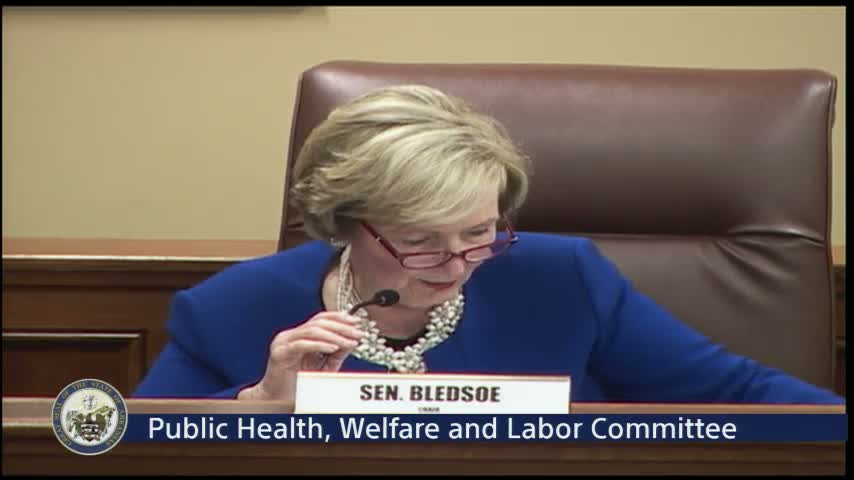
After closing remarks from the sponsor and no objections, a committee member moved a do-pass recommendation. The chair called for the vote; members present responded “aye,” and the chair announced the bill had passed unanimously in committee. The transcript does not record individual roll-call votes or a numerical tally.
The committee chair closed the meeting, noted other bills pending for future agendas and adjourned. The bill now moves to the next steps in the legislative process for further consideration.