Get Full Government Meeting Transcripts, Videos, & Alerts Forever!
Get email alerts on the Surgeon General Visit topic
No spam. Unsubscribe anytime.
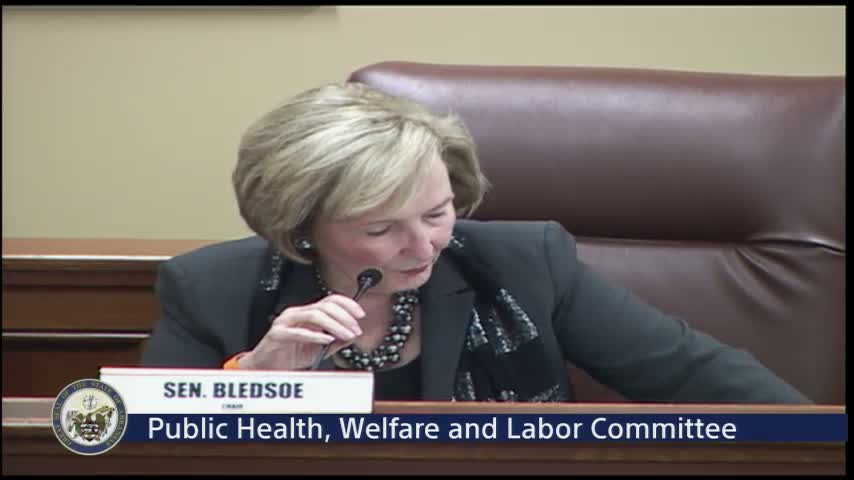
State surgeon general Greg Bledsoe outlines role, COVID treatments and variant concerns to Senate committee
Summary
State Surgeon General Greg Bledsoe told the Senate Public Health Committee about his part-time role, clinical work and committee responsibilities, described current outpatient COVID treatment options including monoclonal antibodies, and warned the committee about more transmissible SARS‑CoV‑2 variants.
State Surgeon General Greg Bledsoe told the Senate Public Health, Welfare and Labor Committee that his job is primarily advisory and advocacy-focused and described how he balances clinical shifts with statewide responsibilities.
Bledsoe, who identified his medical training at UAMS and a public-health fellowship at Johns Hopkins, said the surgeon-general position is technically part time and that he continues to work clinically as medical director of the emergency department at Saint Mary's in Russellville. He listed several pandemic-related groups he serves on, including the physician pandemic group, the CARES Committee (vice chair), the governor's medical advisory committee and a Winter Task Force vice chair role.
"I see my role as advising elected officials on health care policy and then advocating for health care providers and for patients around the state as need be," Bledsoe said.
During questions from the committee, Senator Tamara asked whether primary-care practices’ limited outpatient treatment of COVID had contributed to emergency-department overload. Bledsoe said he did not have an exact percentage but described how treatment guidance has changed since the start of the pandemic. He said for nonsevere patients he commonly prescribes azithromycin and dexamethasone and that monoclonal antibodies are being used for patients who appear likely to progress toward hospitalization.
"Sometimes those antibodies can be helpful in preventing an admission," Bledsoe said.
Bledsoe told the committee there is variation in physician practice and that some clinicians use therapies such as hydroxychloroquine or ivermectin; he added that the Arkansas Department of Health has not banned such prescriptions and that most physicians he knows generally follow guidance on the CDC and Arkansas Department of Health websites.
On viral variants, Bledsoe said the committee should monitor strains first identified in Brazil, South Africa and the U.K., which public-health investigators have reported as more transmissible. He said the main concern is higher transmissibility rather than markedly higher lethality and noted the possibility that vaccines or some therapies could be somewhat less effective against new variants.
Bledsoe closed by stressing that while the virus is mutating, clinicians and scientists are also learning and improving treatments.
The committee thanked Bledsoe for his briefing; he offered to return for further questions in future meetings.