Get Full Government Meeting Transcripts, Videos, & Alerts Forever!
Get email alerts on the Pandemic Enforcement topic
No spam. Unsubscribe anytime.
Committee backs bill to shift COVID enforcement away from businesses; health officials warn of enforcement gaps
Summary
The committee advanced Senate Bill 289, which directs agencies to engage noncompliant patrons rather than penalize businesses during the COVID emergency; Department of Health officials said the language could hamper enforcement and invite litigation.
Senate Bill 289, sponsored by Senator Kim Hammer, would direct public‑health and other agencies during the COVID‑19 emergency to address noncompliant patrons directly rather than penalize the businesses that host them. Hammer said the intent is to ease burdens on small businesses and remove the expectation that owners act as enforcers of emergency directives.
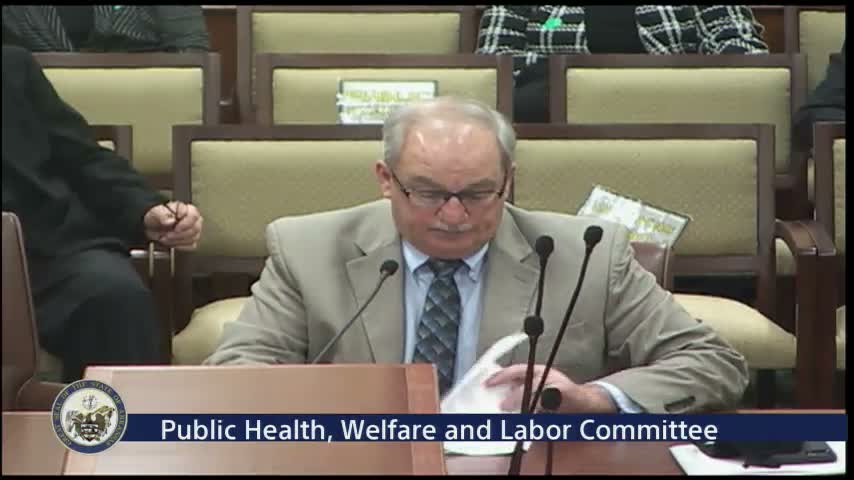
Laura Shue, general counsel for the Department of Health, and Matt Gilmore of the department testified that limiting agency enforcement in this way could undermine public‑health efforts. Shue said the department typically uses education before enforcement and worries the bill’s language — especially an emergency clause — could be used in future litigation to allege prior enforcement was unfair. ``If this passes, this is gonna hamper some of our enforcement efforts,'' Gilmore told the committee.
Committee members asked about the department’s enforcement record during the pandemic. Matt Gilmore said the Department of Health assessed about five penalties to retail or restaurant entities during the relevant period and conducted widespread education and follow‑up inspections. Senators pressed whether the bill might leave small businesses exposed to risk when agencies do not pursue enforcement equally across large chain and small independent establishments.
Hammer argued the bill protects small business owners who must otherwise confront noncompliant patrons: ``We want them to deal with the individual and not expect the business,'' he said, urging a do‑pass vote. After testimony and questions, the committee moved and voice‑voted to pass SB 289.
Next steps: SB 289 passed out of committee by voice vote and will proceed in the legislature; sponsors said refinements could be made on the House side.