Get Full Government Meeting Transcripts, Videos, & Alerts Forever!
Get email alerts on the Sb21 Slag topic
No spam. Unsubscribe anytime.
Senate committee approves bill to classify steel-making slag and mill scale as a beneficial byproduct
Summary
The committee approved SB 21 by voice vote after proponents, including Senator Dave Wallace and Kylie Clanton of Nucor, said the change would codify long-standing use of slag and mill scale as aggregate for roads and provide regulatory certainty for industry and counties that rely on the material.
Senator Dave Wallace told the Senate Public Health, Welfare and Labor Committee that SB 21 would officially classify steel-making slag and mill scale as a "byproduct" rather than waste, arguing the change simply codifies long-standing state practice and protects local infrastructure uses.
"This bill is designed to...name slag a byproduct," Wallace said, explaining counties such as Mississippi and Poinsett rely on slag as an inexpensive road foundation and warning that reclassification as waste would impose large disposal costs and remove a locally used material.
Kylie Clanton, environmental manager at Nucor Yamato Steel, testified in support on behalf of Nucor. Clanton said Nucor is a major regional employer and recycler and described technical and environmental reasons for the company's support. "Nucor Corporation is the largest steel producer in Arkansas and the United States with more than 22,000,000,000 in annual sales and more than 27,000 teammates nationwide," she said. Clanton told the committee Nucor's Arkansas mills produce nearly 1,000,000 tons of slag and mill scale annually and said state and federal transportation agencies have encouraged beneficial use of those materials in infrastructure projects.
Wallace and Clanton emphasized engineering benefits: they said slag provides good adhesion in asphalt, improves skid resistance, is stable when wet and has been used as subbase material for decades. Wallace also warned that other states have temporarily or permanently reclassified different forms of slag as waste, and said codification here would provide certainty for industry and local governments.
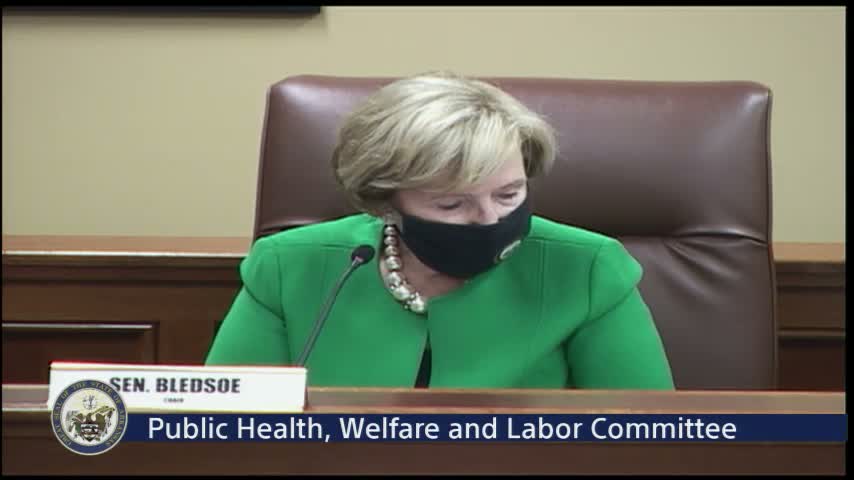
After testimony, the committee received no speakers opposed. A motion to pass SB 21 was seconded and the committee approved the bill by voice vote; the chair declared the bill passed.
What happens next: SB 21 will proceed according to the legislature's standard committee and chamber process; the committee record shows a voice vote at this hearing and does not include a roll-call tally.