Get Full Government Meeting Transcripts, Videos, & Alerts Forever!
Get email alerts on the Insurance Step Therapy topic
No spam. Unsubscribe anytime.
Senate panel advances SB99 to limit insurer 'step therapy' practices after lengthy debate; employers and carriers urge amendments
Summary
SB99, a step-therapy reform bill sponsored by Senator Bledsoe to ease 'fail-first' insurance protocols, drew extensive testimony from physicians and patient groups in favor and from insurers warning of higher costs; the committee voted to pass after sponsors agreed to consider five amendments.
Senator Bledsoe introduced Senate Bill 99 to reform step-therapy (so-called 'fail-first') insurance protocols, saying the goal is "the right medication at the right time for the right patient." The sponsor said at least 25 states have enacted similar reforms. Dr. Shalendra Singh, a practicing rheumatologist, described a patient case in which a physician-preferred biologic was denied and the patient postponed pregnancy because of delay and denials.
Michael Keck, government relations director for the American Cancer Society Cancer Action Network, testified supportively and said delays caused by step therapy can hinder precision oncology and patient outcomes. Keck cited fiscal-impact analyses from multiple states and said similar measures produced little to no fiscal impact in many places.
Opponents from Arkansas Blue Cross and Blue Shield (Max Greenwood and Wendy C.) and Centene (Jack Hopkins) testified the bill risks shifting costs to employers and members, warned that clinical teams may not track every new drug, and urged preserving generic-first protocols and robust exception processes. Blue Cross said exception requests are granted over 60% of the time in their book of business; Centene urged aligning statutory turnaround times with existing prior-authorization timelines (30 days, 72 hours in emergencies).
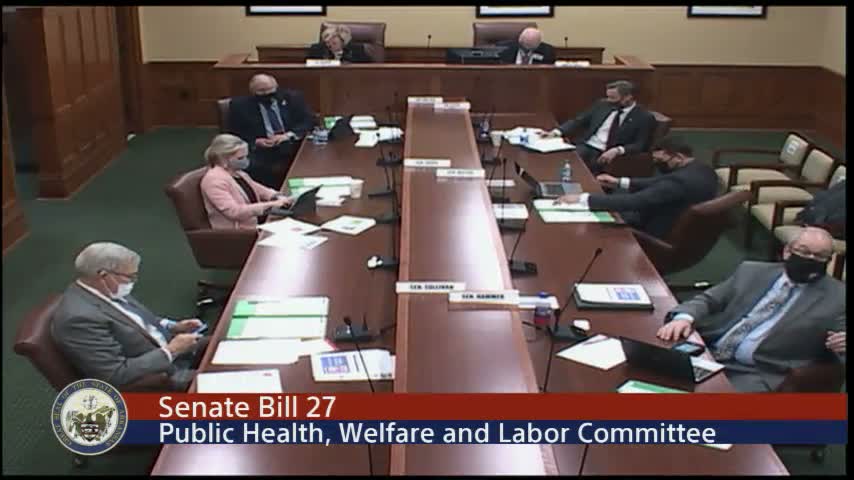
Committee members asked about fiscal studies, requested copies of analyses and asked who drafted the five amendments the sponsor referenced. Senator Bledsoe said five amendments exist and that an amendment to exempt self-insured plans had been agreed; he also said the bill does not change generic-substitution rules. After discussion and an agreement to consider amendments, the committee moved the bill and passed it by voice vote.