Get Full Government Meeting Transcripts, Videos, & Alerts Forever!
Get email alerts on the Veteran Suicide Prevention topic
No spam. Unsubscribe anytime.
Senate passes SB27 to ensure veteran-trained staff on suicide hotline; sponsor frames measure as peer-support expansion
Summary
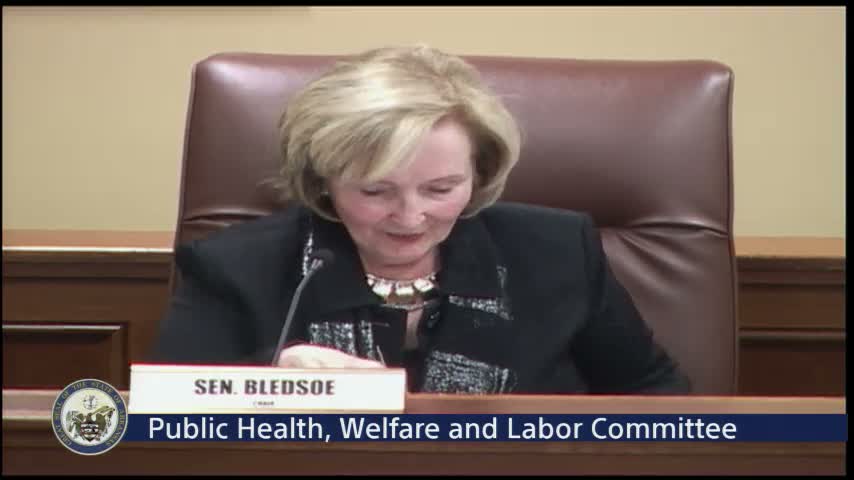
Senate Public Health committee approved SB27 to allow at least one suicide hotline employee to be a veteran or trained to serve veterans and the sponsor said additional funded positions will be pursued separately; the committee passed the bill by voice vote as noncontroversial.
Senator Trent Garner presented Senate Bill 27 to the Public Health, Welfare and Labor Committee as the first of a two-pronged approach recommended by his veteran suicide task force. Garner said the bill would require that at least one hotline employee be a veteran or specifically trained to assist veterans and that peer-to-peer support models have shown positive effects.
"We found throughout many different parts of our training that peer to peer reviews with veterans makes a huge difference," Garner said, explaining that callers often relate better to staff with similar lived experiences. Garner said a second prong—an appropriation for two additional positions—was still being drafted and would be brought to the budget process.
Senator Hammer asked about the number of veteran-related calls; the sponsor said exact counts were not available at the hearing. Senator Sullivan asked whether the bill would force current employees out; Garner and a sponsor representative said the language allows current staff to be trained and is not intended to remove jobs.
Senator Wallace spoke in favor, calling the measure helpful for veterans who struggle to relate to nonveteran staff. The committee moved the bill and passed it by voice vote; the motion was described in the transcript as noncontroversial.