Get Full Government Meeting Transcripts, Videos, & Alerts Forever!
Get email alerts on the Covid Vaccine topic
No spam. Unsubscribe anytime.
Arkansas health official outlines vaccine timeline, warns of surge and limited initial supply
Summary
Dr. Romero of the Arkansas Department of Health told the Public Health, Welfare and Labor Committee that a Pfizer vaccine EUA was expected for mid-December, initial state allotments would be small (planning ~25,000 doses), two-dose regimens and cold-storage limits complicate rollout, and ongoing safety monitoring will continue post-authorization.
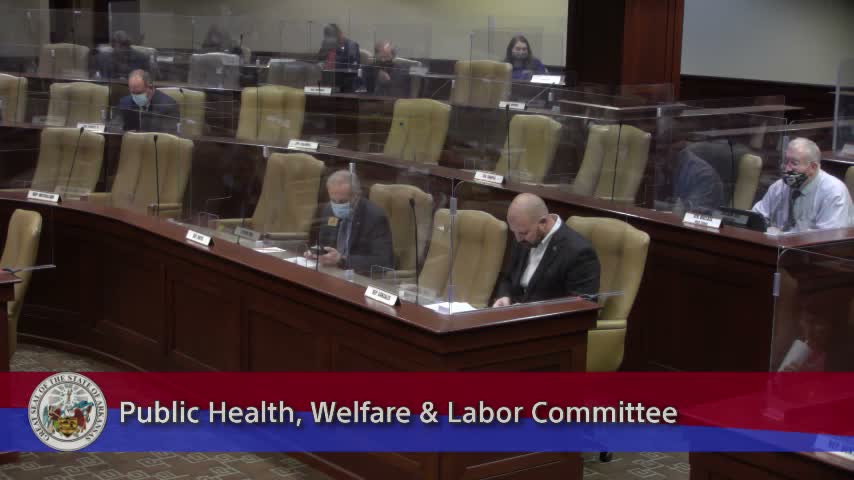
Dr. Romero of the Arkansas Department of Health briefed the Senate Public Health, Welfare and Labor Committee on the expected federal approvals and state planning for COVID-19 vaccines, stressing safety monitoring and distribution challenges.
Dr. Romero said Pfizer’s vaccine was scheduled for an FDA Emergency Use Authorization visit and that the Advisory Committee on Immunization Practices (ACIP) would meet to issue interim recommendations. He described the vaccine as an RNA product with preliminary trial efficacy above 90 percent and a reactogenicity profile that can include fever and injection-site pain. “We are not going to turn this vaccine loose on the public without further scrutiny,” he told the committee, noting that both the FDA and ACIP review safety and efficacy data and that post-authorization (post‑marketing) surveillance will look for rare events.
Why it matters: Arkansas will receive vaccine allocations on a per-capita basis and the initial allotment will not be sufficient to vaccinate everyone who wants it. State planning must prioritize limited doses for highest-risk groups while preserving the cold chain and arranging second doses.
Key details provided
- Timeline: Dr. Romero said states can expect vaccine shipments within roughly 24–48 hours after FDA authorization; ACIP would vote on interim guidance in the days following authorization. - Initial supply: He said Arkansas ultimately will receive enough doses to cover its population (~3,018,000) but the first shipment will be far smaller — the department was planning for an initial allotment in the tens of thousands (Dr. Romero referenced planning around 25,000 doses). Additional allotments are expected in subsequent weeks. - Two-dose schedule and tracking: The Pfizer and Moderna vaccines discussed require two doses; Arkansas will register recipients in the state vaccine registry used previously for childhood immunizations and provide cards to remind people which vaccine they received and when a second dose is due. Staff will send reminders; the state cannot mandate a return but will encourage completion of the series. - Cold-chain and storage constraints: Dr. Romero described Pfizer’s ultra-cold requirements and containerized shipments on dry ice that can be recharged; storage options limit how vaccines are distributed initially and affect which providers can receive them. - Priority groups: ACIP’s Phase 1 priorities were outlined: (1) health-care personnel (including non-clinical staff such as housekeeping and food delivery for equity), (2) residents of long‑term care facilities, (3) essential workers, and then older adults and people with comorbidities. Active-duty military have a separate allocation for their personnel. - Safety and monitoring: Dr. Romero cited past surveillance examples (post-market signals for rotavirus and Guillain–Barré following H1N1) to explain how rare adverse events are detected and managed.
Committee concerns and clarifications
Members asked whether state law would make vaccines mandatory; Dr. Romero confirmed existing Arkansas law does not mandate vaccination and there were no plans to change that. Legislators also pressed for clarity on allotments (state population vs. initial shipments), the timeframe between first and second allotments (Dr. Romero estimated 2–4 weeks between shipments in early rollout scenarios), and whether independent pharmacies and clinics could be vaccinators (he said pharmacies with appropriate refrigeration that register with the state would be included and that more than 500 clinics and practices had signed up as vaccinators as of that morning).
Dr. Romero also warned of an approaching case surge tied to holiday travel and gatherings, emphasizing that hospitals were strained by staffing shortages even where physical bed space remained. He urged continued masking, distancing and hand hygiene while vaccination scales up.
Next steps
ACIP and FDA decisions will shape immediate allocation and use; Dr. Romero offered to return to the committee for updated briefings as federal guidance and shipments evolve. Committee members reserved the right to call for another briefing if initial shipments prompt a surge of constituent questions.