Get Full Government Meeting Transcripts, Videos, & Alerts Forever!
Get email alerts on the Ems Medication Policy topic
No spam. Unsubscribe anytime.
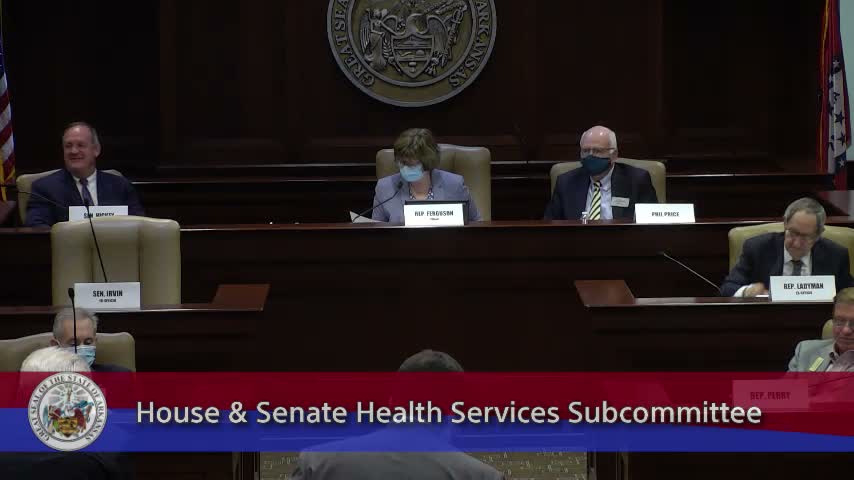
Lawmakers debate proposal to let paramedics administer patients' own prescribed meds
Summary
Dr. Johnson proposed an interim study to allow paramedics to administer medications patients carry for rare disorders; committee members asked about dosage verification, liability, training for adverse reactions, transport destinations, and payment arrangements.
Dr. Johnson told the committee the interim study proposal is intended to empower paramedics in the pre-hospital setting to provide medications that patients carry for rare disorders, such as clotting factors for bleeding disorders, because current rules limit paramedics to medications carried on their ambulances. "Many of these patients carry this medication with them, but as it stands right now, paramedics in the field can only administer medication that they carry on their trucks," he said.
The presenter said the bill is modeled on laws passed in other states and that he has discussed it with the Arkansas Ambulance Association and planned to consult the EMS section of the Department of Health. He described two main facets of the proposal: allowing paramedics to assist with patient-carried medications and permitting transport to more specialized destinations in certain cases.
Committee members raised practical questions. Representative Leightman asked whether other states have success data; Dr. Johnson said he would gather that information. Senator Hickey asked how paramedics would verify dosage and handle liability if a patient claims a certain dosing regimen; Dr. Johnson said medication labels and prescription directions would be the basis and that language needs to be clarified in the legislation. Representative Lademan asked whether paramedics would be trained to recognize adverse reactions; Dr. Johnson said those concerns are fair and would be part of drafting details.
Members also discussed transport and payment: the bill could allow transport to a specialized hospital rather than the nearest facility, but questions remain about who pays for longer transports and whether insurers or Medicaid would cover those trips. Dr. Johnson said those payment issues need resolving as part of the study.
Because the measure was presented as an interim study, the committee did not vote. The presenter and members agreed to gather data from other states, consult DHS/EMS, and work on clear definitions for dosage, allowable medications, and transport/payment rules ahead of potential legislation.