Get Full Government Meeting Transcripts, Videos, & Alerts Forever!
Get email alerts on the Business Interruption Grant topic
No spam. Unsubscribe anytime.
State agencies outline $50M CARES-funded business-interruption grant for service and hospitality industries
Summary
The Department of Parks, Heritage and Tourism presented a proposed $50 million reimbursement grant program using CARES Act funds targeted to service, hospitality and related businesses. Officials described application timing (target Nov. 16–25), eligibility (NAIC-code targeting; firms ≤250 employees), a $250,000 applicant cap, and coordination with DFA for tax-data verification.
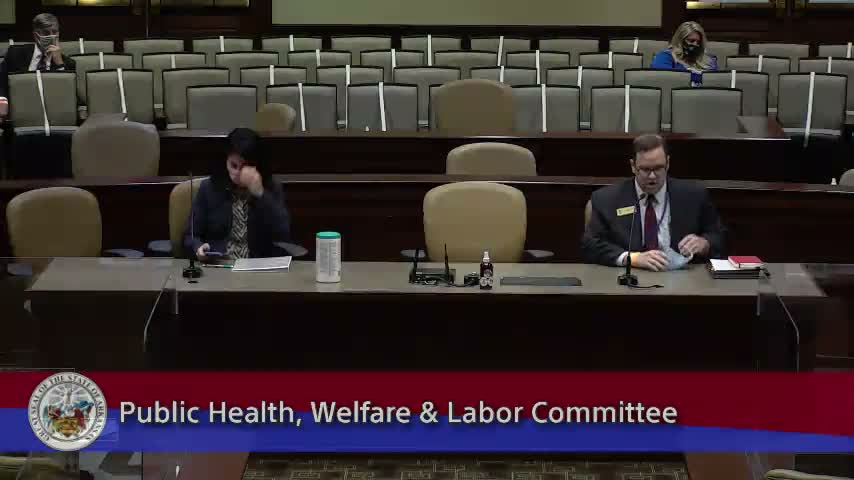
Department of Parks, Heritage and Tourism officials told the Senate Public Health, Welfare and Labor Committee the agency plans a CARES Act–funded business-interruption grant to help service and hospitality businesses affected by COVID-19.
Caleb Osborne said the department proposes to use $50,000,000 from CARES Act allocations to reimburse eligible expenses for businesses directly affected by pandemic measures. Leslie Fiskin, chief of legislative affairs, said the program will be a reimbursement model and that, because many businesses may apply, awards will likely cover a portion of eligible expenses.
Officials described the planned application window and requirements: the agency is targeting an online application opening Nov. 16 with a 10‑day window through Nov. 25, and expects to collect applications and make awards for distribution in December. The application will request NAIC classification codes and require applicants to authorize DFA to release tax records for verification; DFA staff will review sales-tax and other relevant data.
Key limits and eligibility points noted by staff:
• Applicant cap: $250,000 per applicant (aggregate cap across eligible expenses).
• Eligible period: March 1–Sept. 30, 2020, and eligible expenses include PPE, utility costs, rent, certain payroll costs and costs to resume operations (exhibit list provided in rules).
• Exclusions: governmental and quasi‑governmental entities (e.g., city- or county-run venues) were excluded from this rule because of separate local funding streams; the agency said cities and counties have a separate $150,000,000 set‑aside for local distribution.
The department plans a communications campaign including a phone bank (7 a.m.–7 p.m. prior to applications) and partnerships with tourism networks, AEDC and DFA to reach rural and minority-owned businesses. Members urged outreach via local radio and banks to ensure coverage in small towns.
Next steps: the rule package was approved by the executive subcommittee earlier and will go to council; staff will finalize the portal and outreach so applications can open mid‑November if council approval is confirmed.