Get Full Government Meeting Transcripts, Videos, & Alerts Forever!
Get email alerts on the Aries Eligibility System topic
No spam. Unsubscribe anytime.
DHS previews ARIES eligibility system pilot, says pilot to start in five counties in December
Summary
The Department of Human Services previewed ARIES, a single integrated eligibility system to replace legacy platforms for Medicaid, SNAP and TEA; DHS said a December pilot will cover five counties and that the state has spent about $111 million on development with projected SFY21 costs around $94.6 million and annual maintenance near $35.5 million.
The Department of Human Services on Wednesday presented a preview of ARIES, the Arkansas Integrated Eligibility System intended to replace two legacy eligibility platforms and unify Medicaid, SNAP and transitional employment assistance eligibility into a single, mobile‑friendly system.
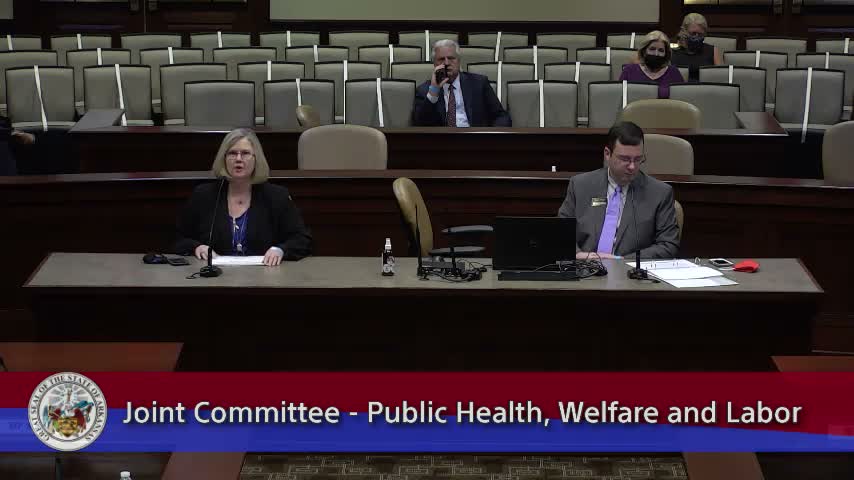
"The Arkansas Integrated Eligibility System is a new system that DHS has been building and will be launching in December," Mary Franklin, director of the Division of County Operations, told the Senate Public Health Committee. Franklin said ARIES (referred to as ARIES or ARIES/ARIES) is intended to reduce client burden by replacing up to eight paper or online forms with one integrated application and to provide a modern worker portal.
Franklin said the state has been working on the system since early 2019. She told members the project has incurred development expenditures of about $111 million in state fiscal year 2020 and that the state projects roughly $94.6 million in state fiscal year 2021 costs tied to the project. Franklin said the system will support English, Spanish and Marshallese interfaces and notices, allow clients to upload documents online, enable electronic notices and provide a ‘‘golden record’’ enterprise master person index so county staff can see a unified client record across programs.
ARIES will be rolled out in phases. DHS plans to pilot the healthcare portion in early December 2020 in five counties — Carroll, Hot Spring, Independence, Lafayette and Pope — that together represent roughly 6% of the Medicaid caseload. Half of the remaining counties are slated for wave 1 in March 2021 and the remainder in April 2021; SNAP and TEA are scheduled for a summer 2021 pilot and statewide completion in winter 2021, according to DHS.
Committee members raised concerns about past troubled implementations of earlier procurement efforts. Franklin acknowledged previous problems with the Curam implementation and said the current approach is a fixed‑cost contract with blended federal match rates, a cost allocation tool approved by federal partners and a multi‑division governance and testing approach. On recurring costs, DHS told the committee it expects maintenance and operations near $35.5 million annually and said it anticipates roughly 20% lower ongoing costs than the two legacy systems combined.
DHS said extensive internal testing, training‑the‑trainer sessions and client focus groups informed the integrated application design and that communications, legal and county operations staff have been involved to reduce operational risk. Franklin said the department has submitted materials to CMS where required and will provide members representing pilot counties with daily updates when the pilot begins.