Get Full Government Meeting Transcripts, Videos, & Alerts Forever!
Get email alerts on the Unemployment Insurance Charges topic
No spam. Unsubscribe anytime.
Small-business owners tell Senate committee COVID-era unemployment charges could spike tax rates
Summary
Salon owners and the Division of Workforce Services told the Senate Public Health, Welfare and Labor Committee that second-quarter unemployment-charge statements tied to pandemic layoffs have produced unexpectedly large account charges; the state is exploring legal and funding options, including whether CARES Act dollars or an executive order can prevent charges from increasing employer tax rates.
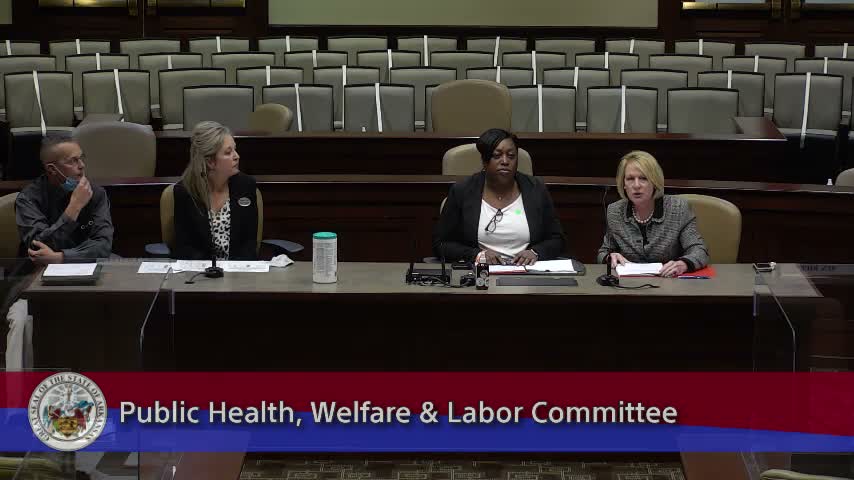
Senate Public Health, Welfare and Labor Committee members heard on Oct. 1 from Division of Workforce Services director Charice Childers and two small-business owners about large unemployment-insurance charge statements that reflect claims filed during the COVID-19 shutdown.
Childers told the committee the documents shown to members are quarterly statements, not final bills, and are used to calculate employers’ annual tax rates. “This is not a bill. These are court this is a quarterly statement. It shows the employer what charges are on their account and gives them the opportunity to look at those and have a period of time in which they can bring this to our attention, and make a request for review,” she said.
Salon owner Christie Ballou described receiving a second-quarter statement with charges she did not normally incur and said the amounts were directly tied to the state-mandated closure in March. Ballou told the committee: “If it stays like this, then when my tax rate is refigured, I'm gonna pay a considerable amount higher than I have ever in the past strictly because of this, which was beyond my control as a business owner because I was ordered to shut down.” Another owner, Thomas Day, said his quarterly charges initially totaled about $127,897 and called the potential future burden “concerning.”
Members pressed Childers on possible remedies. Childers said Arkansas lacks a preexisting statutory “non-charge” for disasters that some other states used and that Mississippi issued an executive order that prevented employers from being charged for COVID-attributable claims for a specified window. She said Arkansas officials are considering options under state and federal law and that the department has kept the governor’s office and Secretary Preston informed; staff expected to present options to the administration the following day.
Childers also noted that the legislature previously appropriated $165,000,000 to bolster the state unemployment trust fund and called the response “multi-pronged,” saying the appropriation was one component of several measures considered to limit future employer-rate increases.
Committee members asked staff to compare other states’ laws and executive orders and to return with options at the November meetings. Several legislators urged clearer, earlier communication from agencies to the legislature when statements or policy choices that affect businesses are imminent.
Next steps: staff will research statutory options and interstate precedents and the Division of Workforce Services will present recommended options to the governor and return to the committee in November.