Get Full Government Meeting Transcripts, Videos, & Alerts Forever!
Get email alerts on the Cdbg Covid Allocation topic
No spam. Unsubscribe anytime.
State outlines $26.4 million CDBG-CV proposal to target food, rent, shelters and small businesses
Summary
AEDC staff told the Senate Public Health Committee the state proposes a method of distribution for about $26.4 million in CDBG‑CV funds: 46% for public facilities/services (non‑entitlement cities/counties), $4.68M for food assistance, $5.76M for rental help, $2.4M for microenterprise and a $1.4M homeless shelter set‑aside.
The Arkansas Economic Development Commission on Wednesday laid out a proposed plan to distribute roughly $26.4 million in federal Community Development Block Grant COVID‑response funds, aiming to steer money to non‑entitlement cities and counties, food programs, rental assistance and small businesses.
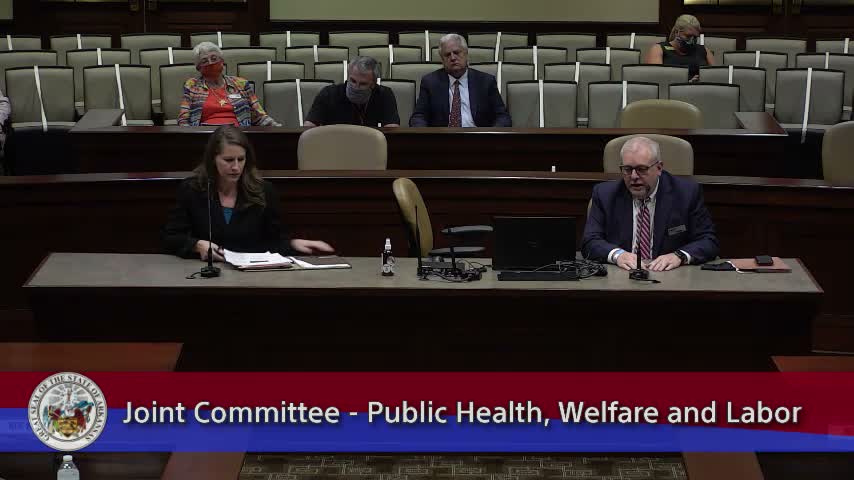
"What we have in front of you is roughly $26,000,000 in CDBG funds that have been allocated to the state of Arkansas for COVID response," Jim Hudson of AEDC told the Senate Public Health, Welfare and Labor Committee. Jean Noble, program manager for the state CDBG program, said the proposal would be submitted as a substantial amendment to the state’s annual action plan and sent to HUD for approval.
Noble outlined the proposed distribution: 46% of the non‑entitlement set‑aside for general public facilities and public services; 18% for a food assistance set‑aside; 22% for rental assistance; 9% for microenterprise/economic development; and the remainder for state administration. She said the grant will have a six‑year total life and the state is required to expend at least 80% of the funds within three years.
The food assistance set‑aside would total $4,680,000 and — according to AEDC — would be delivered in partnership with the Hunger Alliance of Arkansas and routed through food banks, pantries and related programs. Noble said the Hunger Alliance’s proposal breaks that sum into state food purchasing (about 35%), agency and school‑district grants, the Arkansas Beef Project (about 32%), and out‑of‑school feeding programs.
The rental assistance pot would be $5,760,000 drawn from HUD round 2 and round 3 targets. AEDC staff said using CDBG funds allows eligibility up to 80% of area median income (AMI); they cited a statewide 80% AMI figure of $48,800 for a family of four as the eligibility ceiling for the program. The agency said rental assistance would likely cover a fixed short‑term period (two to three months under discussion) to help tenants bridge a moratorium on evictions and avoid immediate displacement, and that payments would be made directly to landlords with documentation to prevent misuse.
A $1.4 million set‑aside for homeless shelter facilities was folded into the non‑entitlement public facilities pot, and AEDC proposed $2.4 million (9%) for microenterprise support aimed at very small businesses with fewer than five employees. Noble said microenterprise funds would require local capacity to run programs and that applicants would have to demonstrate readiness to proceed within the HUD timing constraints.
Committee members pressed AEDC on outreach to smaller cities, hospitals and federally qualified health centers; the agency said it will reach out to mayors, county judges, planning districts and the regular state CDBG contacts and will coordinate messaging with the CARES Act steering committee. AEDC said it will advertise the distribution method, accept public comment, finalize the plan and submit the amendment to HUD.
The committee did not take a vote on the plan during the briefing; AEDC staff asked members to review the percentages and said they would incorporate feedback before formal rulemaking and application forms are posted.