Get Full Government Meeting Transcripts, Videos, & Alerts Forever!
Get email alerts on the Health Equity topic
No spam. Unsubscribe anytime.
Minority Health Commission seeks CARES support for outreach and basic needs; commission to oversee Black Hall of Fame subgrants
Summary
The Arkansas Minority Health Commission reported racial disparities in COVID-19 incidence and urged targeted outreach, testing and culturally competent communications. The commission described a plan to oversee CARES-funded subgrants, including a proposed Black Hall of Fame program to help households with utilities, housing and medical bills.
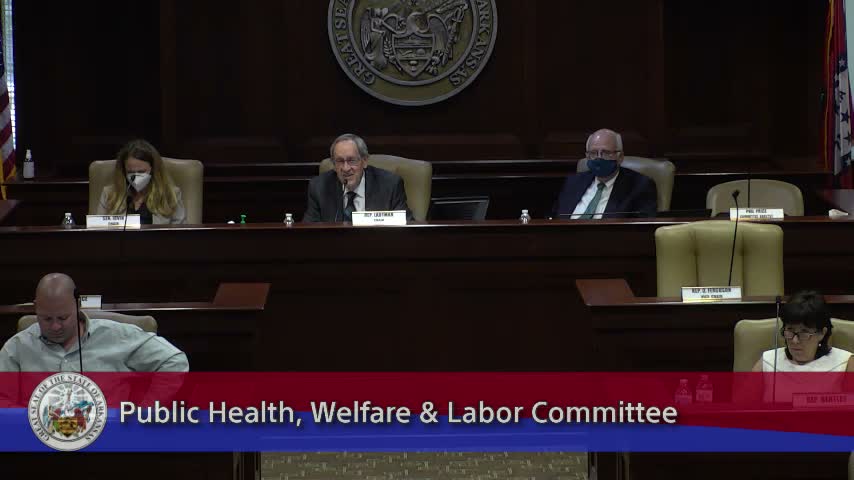
Sharonda Love, director of the Arkansas Minority Health Commission, told the Public Health, Welfare and Labor Committee that minority residents account for a disproportionate share of COVID-19 cases in Arkansas and described the commission's outreach and data work.
Love said minority populations make up about 28 percent of the state population but represented roughly 48 percent of recorded COVID-19 cases in the commission's slide set (racial categories differ from ethnicity). She described health-education efforts in English and Spanish, culturally competent fact sheets, partnerships with community-based organizations and a small mobile-health team that currently has three employees and cannot yet run statewide testing because of PPE and training constraints.
The committee discussed proposals that would route CARES funds through the commission to local groups. Love said the Minority Health Commission has agreed to provide oversight for a proposed Black Hall of Fame subgrant program and that the commission will use its grant rules, quarterly disbursements and DFA and legislative-audit guidance to try to ensure fidelity and auditability.
Members asked for details on eligibility and oversight; the commission said DFA and legislative-audit staff were meeting with the applicant to refine controls. Committee members asked DHS and DFA to provide written guidance on allowable CARES expenditures and on the relationship between statewide emergency-program pots and locally proposed subgrants.