Get Full Government Meeting Transcripts, Videos, & Alerts Forever!
Get email alerts on the Covid Testing topic
No spam. Unsubscribe anytime.
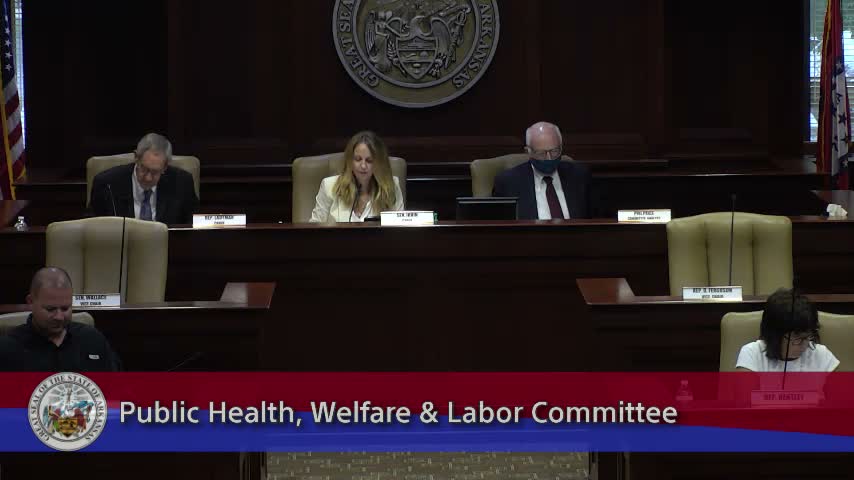
Arkansas health officials outline testing shortfalls, lab upgrades and contact-tracing scale-up
Summary
State health officials told the Senate Public Health, Welfare and Labor Committee that long commercial-lab turnaround times are hampering contact tracing, described steps to expand in-state lab capacity and outlined how CARES-funded contact-tracing contracts will be stood up across Arkansas.
State health officials told the Senate Public Health, Welfare and Labor Committee that long commercial-lab turnaround times are undermining the state’s contact-tracing efforts and described immediate steps to increase in-state testing capacity.
At a July committee session, Dr. Jennifer Dillehay, state epidemiologist, said the Arkansas Department of Health (ADH) public-health laboratory can deliver results in roughly 48 hours depending on specimen transit. By contrast, commercial labs have been reporting results in “7 to 10 days and in some cases longer,” officials said. Dillehay reported a recent daily positive rate of 5.8% and an overall positive rate of 7.9%.
Officials said the public-health lab has added 24/7 shifts, hired additional microbiologists, and operates multiple platforms. ADH has two PerkinElmer high-throughput instruments in operation and has ordered additional platforms, including another PerkinElmer and a Thermo Fisher instrument. A PerkinElmer platform can process up to about 1,000 samples per day under ideal conditions, Dillehay said.
The department stressed supply-chain constraints outside its control. Stephanie Williams, ADH chief of staff, said national demand for instruments and reagents has delayed deliveries; the agency used CARES Act funds to buy machines and is seeking to be “bumped up the queue” with vendors where possible.
On rapid antigen (point-of-care) testing, ADH said many pharmacies and clinics now offer antigen tests that can return results the same day — sometimes within 15 minutes — but availability and cost vary. ADH received a limited federal allotment of Abbott ID NOW units and placed roughly 15 units around the state earlier in the response.
Contract tracing remains a parallel priority. ADH expanded outbreak-response nursing and contact-tracing staff from a pre-pandemic baseline of about 18 nurses to more than 80–100 tracers (plus National Guard support) and has begun contracting additional capacity. Williams said the state expedited procurement and awarded contracts to private vendors to stand up hundreds of tracers; the state has allocated $22 million of CARES funding so far for contact tracing and has submitted supplemental proposals for additional funds to expand capacity.
Committee members repeatedly pressed ADH to obtain and report specimen-collection timestamps from commercial labs so the state can calculate precise turnaround times and prioritize resources. ADH acknowledged incomplete metadata from some commercial reports and said it will rely on a combination of provider reports and enhanced electronic reporting to improve monitoring.
The department also said it is exploring electronic notification methods to speed result delivery. At the time of the hearing ADH used text notifications for negative tests but not for positives because of consent and verification issues; officials said they are exploring options to notify positive patients electronically if the patient agrees.
The committee requested further data on lab throughput, a timeline for the arrival and ramp-up of newly ordered instruments, and a clearer breakdown of state versus commercial lab turnaround times. ADH committed to provide additional documentation to the committee at its next meeting.
The department declined to draw policy conclusions not contained in the record and said the combination of faster in-state PCR capacity, targeted use of point-of-care antigen testing and improved notification and staffing will be required to make contact tracing effective again.