Get Full Government Meeting Transcripts, Videos, & Alerts Forever!
Get email alerts on the Unemployment Pua topic
No spam. Unsubscribe anytime.
Committee hears update on pandemic unemployment assistance; fraud and fund longevity flagged
Summary
DWS reported 93,621 PUA applications with about 43,000 approved and roughly 16,000 in process; legislators raised fraud concerns and asked DHS to consider reinstating verification steps such as a waiting week or in-person ID checks.
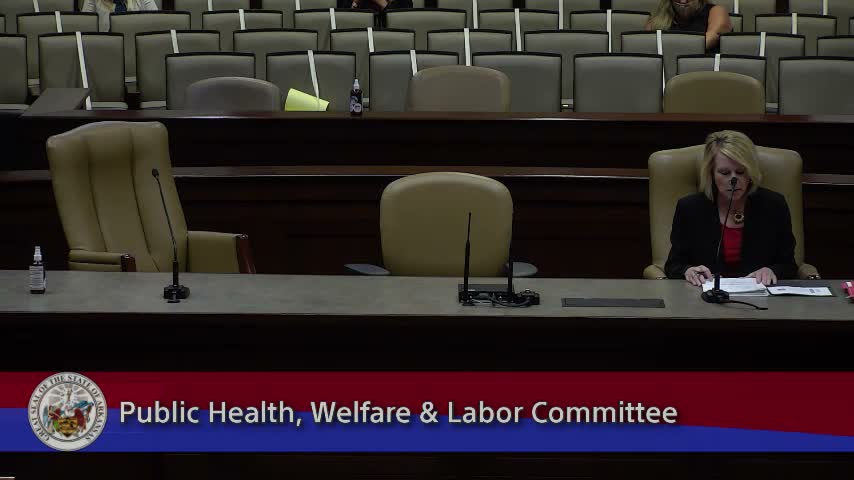
Charice Childers, director of the Division of Workforce Services, briefed the Senate Public Health, Welfare and Labor Committee on the state’s Pandemic Unemployment Assistance (PUA) implementation under the CARES Act. "Since going live on PUA on May 1, we have received about 93,621 applications. We have about 43,000 that are approved," she told lawmakers.
Childers said roughly 16,000 applications remained in process because of incomplete applications or the need for additional documentation; another group of applicants were referred to regular unemployment insurance because they still had wages available. She described particular challenges for self-employed and independent contractors who must upload 2019 tax records or other proof of income and for applicants without scanning or upload skills.
The committee spent substantial time on fraud and mitigation. Childers said the state had placed about 14,000 PUA claims under fraud review and is expanding internal audit and fraud-investigation capacity. "We are expanding our fraud investigation unit and adding staff," she told the committee, and said fraud is a national problem exacerbated by historic data incidents in other jurisdictions.
Lawmakers asked whether restoring a waiting week or requiring in-person ID checks would reduce fraud. Childers said those measures reduce fraud historically but noted staff shortages and public-health constraints had prompted temporary changes when the program needed to get benefits to claimants quickly. She said DHS is reviewing the waiting-week option and the feasibility of additional verification steps.
Members also asked about fund longevity. Childers said the most recent projection showed state unemployment funds could be exhausted in late fall if trends continue and requested that the committee receive updated financial forecasts.
DHS also updated the committee on fraud triage: some claims being reviewed may later be recaptured, and the agency urged citizens to monitor credit reports and follow advice on reporting suspected identity theft. Childers said PUA benefits can run up to 39 weeks and that federal FPUC supplemental payments of $600 were scheduled through July absent further congressional action.
Next steps: DHS will provide updated fund projections, further detail on fraud mitigation steps, and guidance for employers and claimants about referrals between PUA and regular UI.