Get Full Government Meeting Transcripts, Videos, & Alerts Forever!
Get email alerts on the Covid Disparities topic
No spam. Unsubscribe anytime.
Health leaders tell Senate committee COVID is hitting Northwest Arkansas’ Hispanic and Marshallese communities hardest
Summary
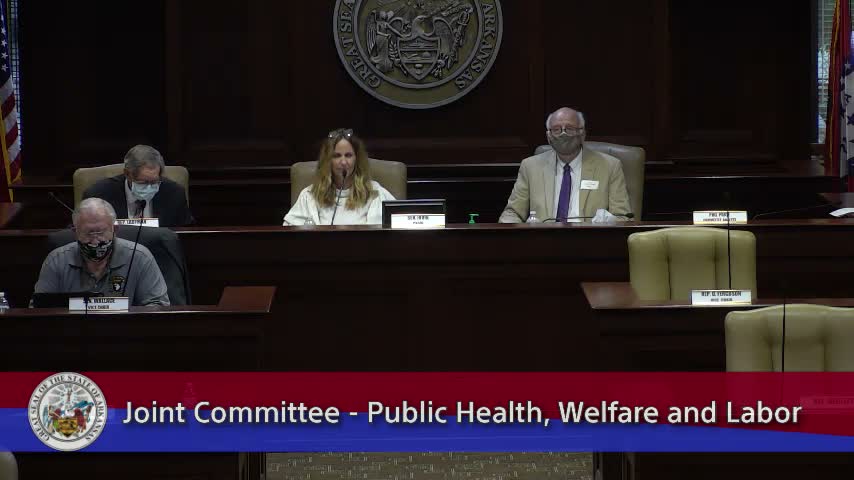
Health officials told the Senate Public Health, Welfare and Labor Committee that Hispanic and Marshallese residents in Benton and Washington counties account for a disproportionate share of COVID-19 cases and deaths, calling for language‑concordant contact tracing, wraparound services and expanded testing.
Pearl McElfish, vice chancellor for UAMS Northwest, told the Public Health, Welfare and Labor Committee that minority communities in Northwest Arkansas are accounting for a disproportionate share of COVID-19 cases and deaths and urged targeted support. "In Northwest Arkansas, that number is 45 percent" of cases in the Hispanic or Latinx community, McElfish said, and the Marshallese community accounts for about 18.5 percent of positive tests in the region.
McElfish said roughly half of recent COVID-19 deaths in Benton and Washington counties have been among Marshallese residents, and that many patients are arriving later in the course of illness. She attributed higher mortality to delayed care and higher rates of comorbidities, and offered to provide more precise age and category counts when available.
Judd Simmingsen, CEO of Community Clinic (a federally qualified health center serving Benton and Washington counties), said his clinics have expanded testing capacity and deployed mobile sites. "Over the last 7 days, community clinic alone, we've done almost 3,000 tests. Over the last 30 days, we've done a little over 8,000," he said, and reported that Marshallese patients represent about 12 percent of those tested but about 29 percent of positive results, with an estimated 32 percent positivity rate for that group in their testing data.
Community clinic and UAMS Northwest described practical steps aimed at keeping infected people out of hospitals: mobile testing, food delivery, multilingual public service announcements and enhanced case management to enable households to isolate safely. McElfish and Simmingsen emphasized the need for "bilingual and culturally appropriate navigators" to do contact tracing and to connect households with food, medication refills and other supports.
Representative Love told the committee the state must ensure contact tracers are from the communities they will serve and asked the legislature to press the governor to pursue a Medicaid waiver to cover the Marshallese population so uninsured adults will seek testing and treatment. Mark Hall of the Department of Human Services said children and pregnant women can receive coverage under the state's Kids First CHIP program, but he described federal immigration‑related limits that currently prevent Medicaid from covering the general Marshallese adult population without Congressional action or other creative state approaches.
Committee members pressed for more consistent testing access and varied hours, with calls for regular (not just occasional) drive‑through and mobile testing sites. McElfish and Simmingsen said testing supply shortages have eased but access and workforce remain constraints: "We have not met the capacity; the capacity has not met the need," McElfish said.
The hearing closed with appeals for continued regional coordination among hospitals, community clinics and public health officials to expand linguistically and culturally tailored outreach, contact tracing and wraparound services to reduce deaths and slow transmission.
Next steps: presenters offered to share more granular data (mean ages and death counts by category) and pledged continued collaboration with the Department of Health and CDC teams visiting the region.