Get Full Government Meeting Transcripts, Videos, & Alerts Forever!
Get email alerts on the Medicaid Ambulance Rates topic
No spam. Unsubscribe anytime.
Arkansas panel reviews 11% Medicaid rate increase for emergency ambulance services
Summary
The Senate Public Health, Welfare and Labor Committee heard DHS present an 11% Medicaid reimbursement increase for emergency ambulance providers and discussed whether it will help rural services that have seen years without rate adjustments.
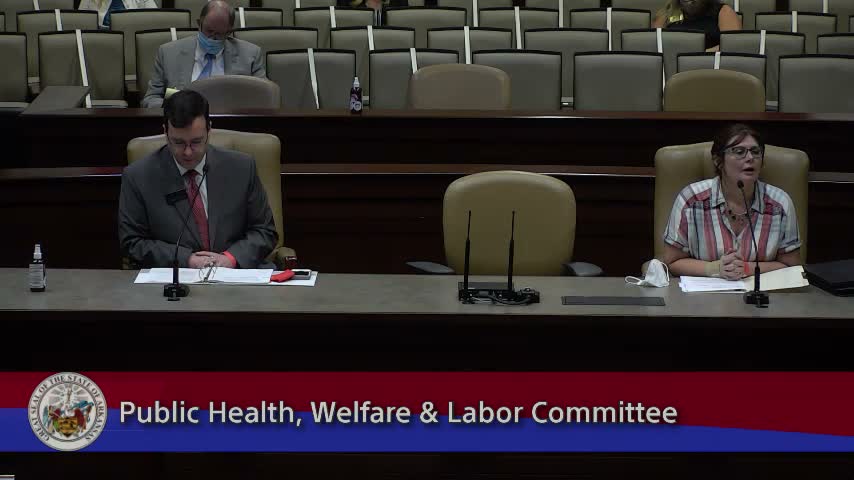
The Senate Public Health, Welfare and Labor Committee on Tuesday reviewed a Department of Human Services proposal to increase Medicaid reimbursement rates for emergency ambulance providers by 11%.
Elizabeth Pittman, deputy director of the Division of Medical Services, told the committee the increase is part of a Medicaid provider manual update and was developed with input from the Arkansas Ambulance Association and an actuarial analysis by Milliman. "We're doing a rate increase of 11% for those providers that provide emergency ambulance services," she said, adding the manual language was clarified to align with Health Department definitions and Centers for Medicare & Medicaid Services (CMS) rules on physician certification and billing.
Members said rural ambulance services have struggled for decades. Senator Johnson called Perry County “a poster child” for the problem and asked whether the increase responds to concerns about flat Medicaid reimbursement; Pittman called the 11% a "partial answer," noting Medicaid is a small payer in the overall ambulance payer mix. "We do believe this will address some of that concern, but Medicaid is a small payer," she said.
Committee members pressed DHS for comparators and methodology. Pittman said DHS staff performed internal comparisons to other states and Medicare, then used an actuary to refine the recommendation. When asked which actuary produced the analysis, Pittman said the work was done by Milliman.
Lawmakers asked if the change covers air ambulance services and whether it might encourage shifting responses from ground to air transport for higher reimbursement. Pittman said the increase applies to both ground and air transport codes and that utilization reviews and provider standards apply to air services. "It does include a rotary wing, fixed wing, air mileage, and air transport," she said, and DHS offered to provide the specific billing codes to committee members.
Members also asked how the increase compares to Medicare or commercial rates and how many years of lag the increase recovers. DHS said it will provide comparative data and that the actuarial review focused on what is appropriate now, not retroactive reimbursement for prior years.
The committee reviewed the rule language and did not object to the rule standing reviewed. DHS representatives said related rate-review work for other provider categories (including a proposed primary care increase) remains underway and will be presented to the committee when complete.
Next steps: DHS said it is targeting a fall effective date for related rule work and will return with supporting comparators and the actuary’s analysis.