Get Full Government Meeting Transcripts, Videos, & Alerts Forever!
Get email alerts on the School Impacts Vaping topic
No spam. Unsubscribe anytime.
Judge and Mountain Home officials tell lawmakers youth vaping is straining schools and juvenile courts
Summary
A Benton County circuit judge and Mountain Home school officials told the Senate committee that concealable vaping devices, instances of THC in cartridges and a rise in school arrests are straining school staff and juvenile justice resources; schools described counseling and Saturday programs as mitigation but asked for more state support.
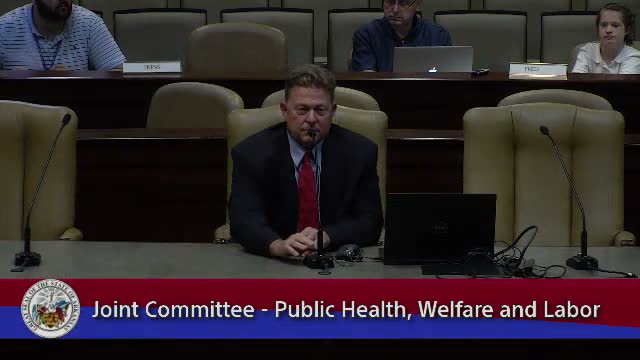
Circuit Judge Thomas Smith and staff from Mountain Home School District described how youth vaping and refillable cartridges with unknown contents are affecting schools and juvenile justice systems.
Judge Smith, who presides over juvenile court in Benton County, said schools and law enforcement report increased possession and use of vaping devices among students. "We have to get the vape away from the kids," he said, warning that current penalties for nicotine devices (typically small fines) provide limited tools for intervention. He added that some school arrests now involve devices containing marijuana and that juvenile‑justice systems lack unified data on how many school drug offenses are tied to vaping devices.
Mountain Home mental‑health coordinator Matt Sutton and junior high principal Kyle McCarn told the committee they routinely confiscate a wide variety of small, concealable devices and that staff time required to investigate incidents is substantial. Sutton said his district recently recorded five medical incidents in the high school over two weeks, three of which required ambulance transport; the district uses counseling interventions and a Saturday tobacco‑education program as alternatives to suspension but said staffing limits constrain scale-up.
School officials described limited on‑site capacity to identify liquid contents and inconsistent reporting across districts. "We don't have detectives; we don't have phlebotomists on staff to do tox screens," McCarn said, noting the expense and logistical barriers to laboratory testing of confiscated liquids. Mountain Home requires families and students to complete five counseling sessions after a vaping incident and runs alternating Saturday education sessions, but officials said more counselors and nurses would be needed to expand interventions statewide.
Committee members discussed possible policy responses ranging from stronger school reporting requirements to diversion programs that avoid mass criminalization of adolescents. Judges and educators urged the committee to consider prevention resources and targeted enforcement tools that balance public‑health aims with juvenile‑justice reform goals.
What happens next: Schools and juvenile courts will be included in the interim study data collection to inform potential legislative language on enforcement, reporting and school‑based interventions.