Get Full Government Meeting Transcripts, Videos, & Alerts Forever!
Get email alerts on the Vaping Evali topic
No spam. Unsubscribe anytime.
State health officials update committee on EVALI cases, vitamin E acetate link and policy options for flavors and open systems
Summary
The Arkansas Department of Health reported 23 confirmed or probable EVALI cases with no Arkansas deaths, said vitamin E acetate was frequently identified in bronchoalveolar lavage samples, and discussed regulatory and education options including flavor restrictions, open‑system bans and school‑based prevention.
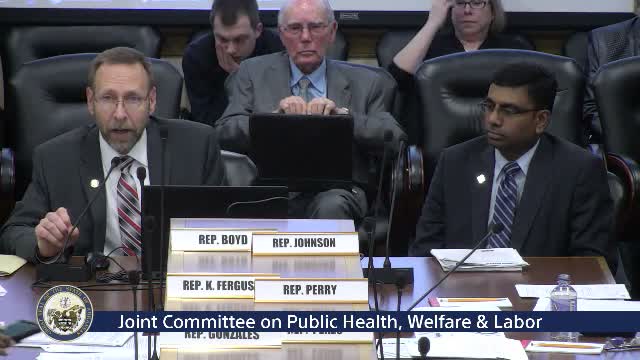
Arkansas Department of Health Secretary Dr. Nate Smith and colleagues updated the committee on e‑cigarette or vaping product use‑associated lung injury (EVALI) and policy responses.
Dr. Smith said nationally there have been thousands of hospitalizations and dozens of deaths; in Arkansas the department counted 23 confirmed or probable cases (median age 21, range 17–54) and no deaths. He said investigational testing of bronchoalveolar lavage samples has frequently detected vitamin E acetate, an oil‑based cutting agent often associated with illicit THC e‑liquids. "In 51 bronchoalveolar lavage samples that were tested, 48 of them had vitamin e acetate," Dr. Smith said, and cautioned that other compounds (including coconut oil) have also been found.
Officials explained that the FDA’s recent federal action targeted cartridge‑based products (e.g., JUUL‑like devices), leaving refillable open systems and many disposable products unregulated at the federal flavor level; they identified disposable brands and open refillable devices that have become popular with youth. Dr. Bala and colleagues noted at least four states (New Jersey, Illinois, Iowa and others) are examining restrictions on open systems or broader flavor bans.
Committee members raised policy tradeoffs: heavy regulation or taxation of legal products could push users toward illicit markets that were implicated in EVALI, while leaving flavors and open systems available has contributed to dramatic youth uptake of nicotine. Dr. Smith said the department is expanding school and community prevention efforts, highlighting Project Prevent Youth Coalition and Be Well Arkansas cessation messaging to offer counseling and school‑based interventions.
Members requested an updated analysis of other states’ regulatory actions and the DOH agreed to provide more detail on state bans, flavor restrictions and enforcement options.