Get Full Government Meeting Transcripts, Videos, & Alerts Forever!
Get email alerts on the Covid 19 topic
No spam. Unsubscribe anytime.
Arkansas health officials tell Senate panel there are no known COVID‑19 cases in state, outline testing and quarantine plans
Summary
Arkansas Department of Health told the Senate Public Health committee there were no known COVID‑19 cases in the state, that ADH was monitoring roughly 100 travelers, had laboratory capacity for about 1,800–2,000 assay runs and was coordinating with commercial labs; officials urged screening at long‑term care facilities and explained quarantine and reporting procedures.
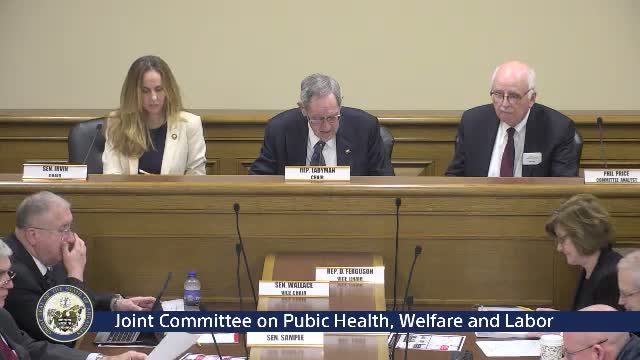
Dr. Nate Smith, secretary of the Arkansas Department of Health, told the Senate Public Health, Welfare and Labor Committee that "as of today, we have no known cases of COVID 19 or the novel coronavirus in Arkansas." He said the department was "aggressively monitoring approximately a hundred travelers" and was testing in the state public health laboratory.
Smith said ADH had immediate supplies sufficient to perform roughly 1,800 to 2,000 test assays (noting multiple specimens per patient), and that commercial laboratories, including LabCorp and Quest, had begun accepting specimens. "We've requested that they send any positive results to us for confirmation and that they send any results to us, so that we can have a record of those," he said.
In response to committee questions about containment, Smith described the state's approach to travelers: officials ask identified travelers to home‑quarantine for 14 days and monitor them daily (by phone and software). Symptomatic travelers are tested immediately, and positive cases trigger contact tracing. "If we have any positive test results, then we'll, of course, do contact tracing," he said.
On protecting high‑risk residents, Smith said a directive developed with the Department of Human Services and industry asks long‑term care facilities to screen visitors for travel and exposure history, symptoms and fever. "We don't want someone who is actively harboring COVID‑19 or influenza ... spreading that around in a nursing home," he said.
Committee members asked about the ADH call center and lab coordination. Smith said the department operates a 24‑hour line staffed by clinicians and had received several hundred calls that morning; for commercial lab positives ADH requests specimens for confirmation to maintain quality control. He noted turnaround times vary—rapid antigen tests are used for point‑of‑care decisions, while PCR assays are more sensitive but return results in 24–48 hours.
Smith addressed clinical uncertainties: the incubation period averages about five days (most people who will become symptomatic do so by nine days), estimates suggest 80–85% of infections are mild or asymptomatic and 15–20% are severe, and the virus' environmental persistence depends on temperature and humidity. "Probably in most situations we're talking hours rather than days," he said of surface persistence, adding that it is unknown whether transmission will decrease in warmer months.
The session closed with committee members asking about insurance reimbursement and costs; Smith said commercial insurers and Medicaid "agreed to pay for it," but he did not provide a specific commercial‑lab price.
The committee did not take formal action on ADH guidance but requested continued updates; ADH staff said they would coordinate to publish hotline numbers and additional public guidance.