Get Full Government Meeting Transcripts, Videos, & Alerts Forever!
Get email alerts on the Medicaid Policy topic
No spam. Unsubscribe anytime.
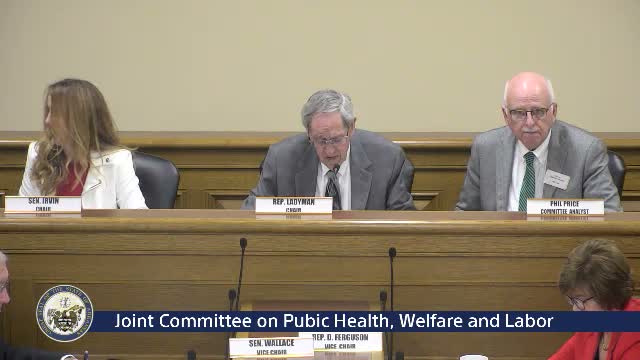
DHS, DMS present Medicaid rule changes and rate-review updates to committee
Summary
DHS and DMS told the Public Health Committee they are removing domiciliary care from the Arkansas Medicaid state plan, updating a PCCM template to a CMS format, clarifying ABLE-account estate-recovery language, and finishing a second round of rate reviews while soliciting stakeholder feedback.
Mark White of the Department of Human Services told the committee the agency is proposing a repeal to remove domiciliary care from the Arkansas Medicaid state plan because the optional service has not been used in at least three years and no certified providers exist. "We are removing domiciliary care from the Arkansas State Medicaid plan," White said, adding DHS reviewed claims data back at least three years and found none.
White and Janet Mann (Division of Medical Services) also presented a set of largely technical or administrative changes: they said the Primary Care Case Manager (PCCM) documentation is being reformatted to a CMS-developed template and that the substantive program details remain unchanged. "All the information, the details of the program, all those are remaining exactly the same," Mann said of the template update.
Larry Crutchfield, Division of County Operations, described changes to implement Act 59 of 2019 so ABLE accounts are not listed as subject to state estate recovery and can transfer to an estate or a designated beneficiary on death. In long-term care policy, a presentation by the Division of Provider Services and Quality Assurance noted removal of a residency question and added privacy language required by FBI/Federal procedures clarifying who can release national background-check information.
On rate reviews, Mann said DHS is finishing its second round, has sent draft reviews to stakeholders for comment and does not recommend changes to hospice (which remains at Medicare rates). She said the agency is studying lab and x-ray codes and has completed review of nurse practitioner codes; physician primary-care codes are under evaluation for potential increases and any rate changes will move through actuary review and budget approval before being finalized. "We do not mark it final until after that information is moved into the report," Mann said, describing the stakeholder comment and budget-review steps.
Why it matters: Removing an unused Medicaid service and updating administrative templates reduce regulatory clutter; rate reviews determine provider reimbursement levels that influence provider participation and state budgets. Committee members pressed DHS on timing for changes tied to an upcoming minimum-wage increase and on whether provider comments had been received; DHS said recommendations are initial and may change once stakeholder submissions and actuary work are complete.
Next steps: The rules were recorded as "reviewed" by the committee. DHS will continue stakeholder engagement and move any final rate recommendations through actuarial analysis and the budget process.