Get Full Government Meeting Transcripts, Videos, & Alerts Forever!
Get email alerts on the Interim Study Vaping topic
No spam. Unsubscribe anytime.
Senate public health committee adopts interim study on youth vaping; tax, flavor limits and zoning among options
Summary
The Senate Public Health, Welfare and Labor Committee voted to adopt an interim study on vaping policy after hearing proposals to tax nicotine delivery products, restrict flavored products and expand local authority over advertising and outlet density. The measure passed by voice vote and will inform next-session legislation.
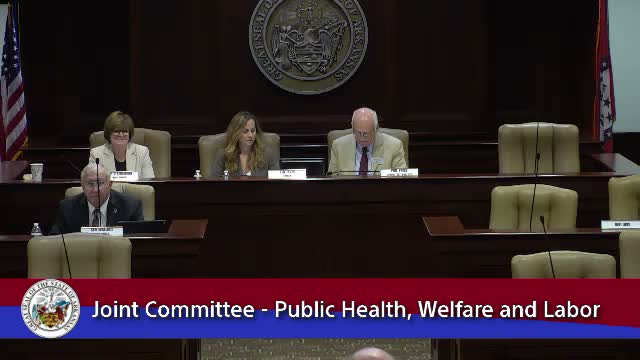
The Senate Public Health, Welfare and Labor Committee on Wednesday voted to adopt an interim study to develop policy options aimed at reducing youth vaping and its harms.
Senator Mark Hendren (presenting the interim study proposal) told the committee lawmakers must act now to curb a growing problem among young people. “If you want more of something… subsidize it, and if you want less of it, tax it,” Hendren said while urging members to seek compromise and move a workable proposal forward. He outlined revenue estimates from earlier drafts and said prior versions projected roughly $6 million to $10 million depending on whether taxes are levied at wholesale or retail levels.
Representative Ferguson moved to accept the interim study proposal and asked that deliberations remain in the full joint public health committee; Senator Wallace seconded the motion. The chair called for the ayes and announced the motion adopted by voice vote.
The interim study directs staff and members to gather data and draft policy options that could include excise taxes on vaping products, expansion of clean‑indoor‑air laws to e‑cigarettes, restrictions on flavored products and stronger local control over advertising and outlet density. Senator Hendren said some proposals specifically would direct licensing and zoning rules—such as prohibiting vape retailers within 1,000 feet of schools—and suggested revenue could be allocated for school safety and prevention programs.
Committee members pressed for fiscal detail. Senator Garner asked about the likely budgetary impact; Hendren replied that a definitive fiscal estimate depends on whether taxes are applied at wholesale or retail and on final product definitions and collection methods. “Until we agree first off that we’re going to do something to tax it… we’ve got to know the method and then we’ll get a fiscal impact,” he said.
The interim study sets up staff work and hearings through the interim session to narrow options and return recommended statutory language. Committee leadership said they intend to examine multiple policy levers rather than adopt a single approach, and will seek additional data from state agencies, schools and local law enforcement to inform trade‑offs between public‑health interventions and enforcement consequences.
What happens next: The interim study was adopted and committee staff will gather additional evidence, cost estimates and stakeholder input to draft bills for the next legislative session.